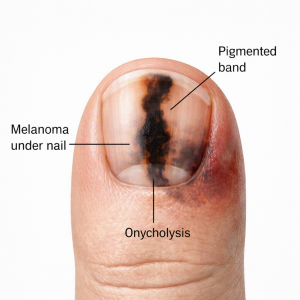
subungual melanoma, a type of skin cancer that develops under the fingernail or toenail
Melanoma is a serious skin cancer that can develop in various parts of the body, but many people are surprised to learn that it can also occur in the nail bed. This condition, known as nail bed melanoma, is often elusive and may be mistaken for other nail disorders. Understanding its symptoms, causes, and treatment options is crucial for early detection and effective management.
What is Melanoma of the Nail Bed?
Nail bed melanoma is a type of skin cancer that forms under the nail and can affect both the fingernails and toenails. It originates in the melanocytes, the cells responsible for producing pigment in the skin. This form of melanoma is relatively rare but can be aggressive if not detected early. Unlike other types of melanoma, which usually develop on sun-exposed skin, nail bed melanoma can occur in areas that receive little or no UV exposure.
Symptoms of Nail Bed Melanoma
Recognizing the symptoms of nail bed melanoma is essential for timely intervention. Common signs include:
Dark streaks or lines under the nail.
Changes in the nail color, including black or brown areas.
Acral lentiginous melanoma, which may present as a dark band that spans the length of the nail.
Separation of the nail from the nail bed, medically known as onycholysis.
Swelling or pain surrounding the nail.
If you notice any of these symptoms, it is crucial to consult with a healthcare professional as soon as possible. Early detection significantly improves the prognosis for individuals with nail bed melanoma.
Causes and Risk Factors
The exact cause of nail bed melanoma is not fully understood, but several risk factors may contribute to its development:
Age: The risk of melanoma increases with age, particularly in individuals over 50.
Skin Type: People with fair skin, light hair, and light eyes have a higher risk of developing melanoma.
Genetic Factors: A family history of melanoma can increase susceptibility.
Persistent Trauma: Individuals who experience chronic trauma to the nail may have a higher risk.
Research has shown that individuals with a history of non-melanoma skin cancers are also at an increased risk for developing melanoma (Cancer.org).
Diagnosis of Nail Bed Melanoma
To diagnose nail bed melanoma, a dermatologist will conduct a thorough examination of the nail and surrounding skin. This may involve a dermatoscopy—a non-invasive technique that allows the physician to see structures beneath the surface of the skin—and a biopsy, where a small sample of the suspicious tissue is removed for laboratory analysis.
Early diagnosis is paramount because nail bed melanoma often masquerades as other benign conditions. For example, it can be confused with subungual hematoma, which is a collection of blood beneath the nail due to injury. A definitive diagnosis is critical for appropriate treatment and management.
Treatment Options
Treatment for nail bed melanoma depends on the stage of the cancer and other individual factors. Common treatment options include:
Surgical Excision: The most common treatment involves surgically removing the melanoma along with a margin of healthy tissue. This procedure aims to ensure that all cancerous cells are eliminated.
Lymph Node Biopsy: If the melanoma has spread, a sentinel lymph node biopsy may be performed to determine if cancer has invaded the lymphatic system.
Immunotherapy: Advanced cases of melanoma may be treated with immunotherapy, which helps the body’s immune system to fight against cancer cells.
While no preventative measure can guarantee the avoidance of nail bed melanoma, certain practices can help reduce the risk:
Regular Skin Checks: Periodic examinations of your nails and surrounding areas for any changes are essential.
Sun Protection: Although the nails are less exposed to UV rays, applying sunscreen on the hands regularly can provide additional protection against skin cancers.
Avoiding Trauma: Reducing nail trauma can help decrease the risk of developing melanoma associated with chronic injury.
Conclusion
Nail bed melanoma is a rare but serious condition that requires prompt diagnosis and treatment. Being aware of the symptoms and risk factors can empower you to seek medical attention early. If you notice any concerning changes in your nails, don’t hesitate to contact a qualified healthcare professional. At our Houston clinic, we are dedicated to providing personalized care and guidance for all your podiatric needs. Call us today or book an appointment online!
Don’t let foot or ankle pain slow you down. Our podiatry team proudly serves patients in Houston and Cypress, TX. Call (832) 415-1790 or book online at www.denielfootandanklecenter.com.



Comments
[…] Understanding Melanoma of the Nail Bed | Houston Foot Clinic […]
[…] Understanding Melanoma of the Nail Bed | Houston Foot Clinic […]
Comments are closed.