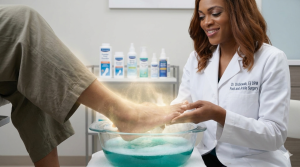
Dr. Eji Shobowale, DPM, explains how moisture buildup in athletic footwear can lead to bacteria growth and persistent foot odor during a patient consultation at DeNiel Foot and Ankle Center.
Foot odor is a common and often embarrassing issue that many people face. While it can impact anyone, understanding the factors that contribute to this condition is key to finding a cure for foot odor. Here’s an in-depth look into the causes, prevention techniques, and effective treatment options for foot odor.
What Causes Foot Odor?
Foot odor, medically known as bromodosis, is primarily caused by bacteria that thrive in the warm, moist environment of our shoes. As sweat is produced, it creates an ideal breeding ground for these microorganisms. Over time, these bacteria break down sweat components, leading to the characteristic odor.
Sweat Glands and Bacteria
The feet contain a high concentration of sweat glands, producing about half a pint of sweat daily. According to the Cleveland Clinic, this perspiration is typically odorless until it comes into contact with bacteria, which digest the sweat and release foul-smelling byproducts.
Types of Footwear
Your choice of shoes can significantly contribute to foot odor. Tight shoes and those made of non-breathable materials (like plastic or synthetic leather) can trap moisture and impede airflow, exacerbating odor issues. In contrast, breathable materials like canvas can help allow moisture to evaporate.
Prevention Strategies
Preventing foot odor is often more manageable than treating it. The following tips can help keep your feet fresh:
Maintain Good Hygiene: Regular washing and thorough drying of your feet are essential. A daily routine that emphasizes washing in soap and water can help eliminate odor-causing bacteria.
Choose the Right Socks: Opt for moisture-wicking socks made from materials like merino wool or synthetic fibers designed to pull moisture away from your skin.
Alternate Shoes: Give your shoes time to air out by rotating pairs. This reduces moisture buildup and allows for drying.
Foot Powders and Antiperspirants: Use foot powders or antiperspirants to absorb sweat and minimize odor. Products containing aluminum chloride can be particularly effective.
Effective Treatments for Foot Odor
If prevention tactics alone don’t eliminate foot odor, several treatment options can help.
Over-the-Counter Solutions
There are numerous over-the-counter (OTC) products designed to combat foot odor. These include antifungal powders, sprays, and odor-fighting insoles. Look for products with ingredients like zinc pyrithione, which can neutralize bacterial growth.
Home Remedies
Some home remedies can also provide relief:
Soaking: Soaking your feet in a mixture of water and vinegar or baking soda can help neutralize odors.
Epsom Salt Baths: A warm soak with Epsom salt may help reduce foot odor by killing bacteria and fungi.
When to See a Doctor
If you’ve tried various methods without success, it may be time to consult a podiatrist. Persistent foot odor could indicate an underlying condition, such as a fungal infection or hyperhidrosis (excessive sweating). A podiatrist can provide tailored solutions to address your specific problem.
Conclusion
Foot odor is not only an annoyance; it can also affect your confidence and social interactions. However, understanding its causes and employing effective prevention and treatment methods can help you maintain fresh feet. If foot odor becomes a persistent issue, don’t hesitate to contact our Houston or Cypress clinic for expert advice and treatment options that suit your needs. Enjoy fresh and odor-free feet!
For patients in Houston and Cypress, TX, our podiatry team provides compassionate, evidence-based care to relieve pain and restore comfort. Call us today at (832) 415-1790 or visit www.denielfootandanklecenter.com to schedule your appointment.