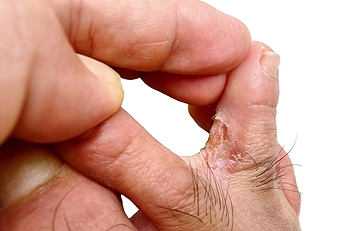
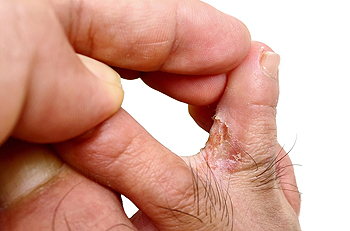
 Corns will typically develop on the pinky toe or between the toes as a result of pressure and friction. A common cause of the development of this condition, is from shoes that do not fit correctly, which causes the toes to have inadequate room to move about. This painful ailment may cause pain to exist inside the toe, and this may be a result of the pressure that is exerted on sensitive nerves. Corns are divided into two categories, and are referred to as hard or soft corns. The latter will exist in between the toes and will thrive in moist environments. Hard corns typically form on the tops of the toes where that portion of the toe meets the shoe. Corns can be prevented by choosing to wear shoes that fit properly. If you are experiencing hard or soft corns, it’s advised to consult with a podiatrist who can suggest proper treatment options that are correct for you.
If you have any concerns regarding your feet and ankles, contact Dr.Eji Shobowale of DeNiel Foot & Ankle Center. Our doctor will treat your foot and ankle needs.
Corns: What Are They? and How Do You Get Rid of Them?
Corns can be described as areas of the skin that have thickened to the point of becoming painful or irritating. They are often layers and layers of the skin that have become dry and rough, and are normally smaller than calluses.
Ways to Prevent Corns
There are many ways to get rid of painful corns such as wearing:
- Well-fitting socks
- Comfortable shoes that are not tight around your foot
- Shoes that offer support
Treating Corns
Treatment of corns involves removing the dead skin that has built up in the specific area of the foot. Consult with Our doctor to determine the best treatment option for your case of corns.
If you have any questions please feel free to contact our office located in Cypress, TX. We offer the newest diagnostic and treatment technologies for all your foot and ankle needs.
Read more about Corns: What Are They, and How Do You Get Rid of Them
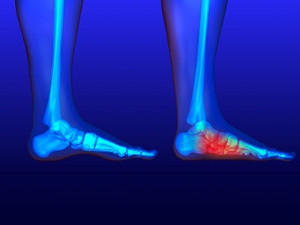
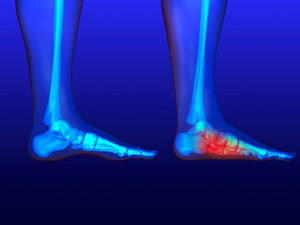 Fallen arches, or flat feet, is a condition in which the arch is absent from the foot. It’s typically noticeable while standing, and the feet may roll inward as a result of the non-existent arch. People with this condition may find that their shoes wear unevenly, and this may be more prevalent on one side. Pain in the arch of the foot or inner side of the ankle may often be felt with flat feet, and in more severe cases, swelling may occur. The purpose of the arch is to distribute body weight across the feet, and having fallen arches may prevent this from occurring. There are several causes of this condition, including family history, incurring a foot or ankle injury, or arthritis. If severe pain and discomfort are hindering your daily activities, it’s suggested to consult with a podiatrist to allow for proper diagnosis and effective treatment.
Flatfoot is a condition many people suffer from. If you have flat feet, contact Dr.Eji Shobowale from DeNiel Foot & Ankle Center. Our doctor will treat your foot and ankle needs.
What Are Flat Feet?
Flatfoot is a condition in which the arch of the foot is depressed and the sole of the foot is almost completely in contact with the ground. About 20-30% of the population generally has flat feet because their arches never formed during growth.
Conditions & Problems:
Having flat feet makes it difficult to run or walk because of the stress placed on the ankles.
Alignment – The general alignment of your legs can be disrupted, because the ankles move inward which can cause major discomfort.
Knees – If you have complications with your knees, flat feet can be a contributor to arthritis in that area.
Symptoms
- Pain around the heel or arch area
- Trouble standing on the tip toe
- Swelling around the inside of the ankle
- Flat look to one or both feet
- Having your shoes feel uneven when worn
Treatment
If you are experiencing pain and stress on the foot you may weaken the posterior tibial tendon, which runs around the inside of the ankle.
If you have any questions please feel free to contact our office located in Cypress, TX. We offer the newest diagnostic and treatment technologies for all your foot and ankle needs.
Read more about Flat Feet


