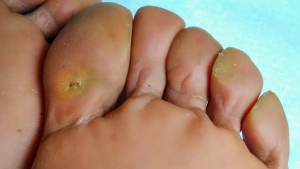
Hole in the center due to the structure of the wart/callus
Short answer: If your callus has a hole, it might actually be a plantar wart, not a regular callus. Plantar warts, caused by the human papillomavirus (HPV), can have a central hole due to clotted blood vessels. Consulting a podiatrist can help in diagnosing and treating it, ensuring it doesn’t spread or cause pain.
Why Your Callus Might Have a Hole
It might surprise you, but finding a hole in your callus could indicate it’s actually a plantar wart. Plantar warts are skin growths prompted by the human papillomavirus (HPV) and often appear on the soles of the feet. These warts can develop a noticeable hole at the center, encircled by clotted blood vessels that may resemble tiny black dots—sometimes called wart seeds. This is a key difference from regular calluses, which usually form due to repeated friction or pressure and appear as layers of tough, thickened skin without holes or dots.
What You Can Do at Home
If you suspect that the hole in your callus could be due to a plantar wart, there are proactive steps you can take at home. Start by maintaining excellent foot hygiene. Wash your feet daily with soap and water, and dry them thoroughly, particularly between the toes, to prevent moisture buildup that encourages HPV.
Protect your feet by avoiding walking barefoot, especially in communal areas like public showers, pools, or locker rooms, where the virus can spread easily. Use flip-flops or shower shoes in these environments. Over-the-counter treatments, such as those containing salicylic acid, might help, but these should be applied cautiously. It’s particularly important to seek guidance from a healthcare provider before using them if you have diabetes or poor circulation, as these conditions can complicate foot care.
Regular foot inspections at home can help you catch changes early—look for new holes, growths, or discomfort. Catching issues early on helps prevent complications.
How a Podiatrist Can Help
Seeing a podiatrist plays a crucial role when dealing with a possible plantar wart. A professional can accurately diagnose whether it’s a wart or just a hard callus, which is essential for choosing the correct treatment. This diagnosis typically involves a careful examination of the skin and possibly paring away a small section of the callus to inspect it closely for the tiny black dots.
Treatment options a podiatrist might offer include topical treatments using medical-grade salicylic acid to peel away the wart, cryotherapy involving the freezing of wart tissue with liquid nitrogen, or laser therapy for persistent cases that have been resistant to other treatments. Professional treatment provides targeted care specifically designed to eradicate the wart virus and reduce the risk of spreading it to other areas of your foot or to others.
If you’re uncertain whether your callus has developed into a wart or you need specialized treatment, consulting a podiatrist is essential to determine the appropriate next steps. Self-treating without a correct diagnosis could lead to further complications or prolonged discomfort.
When to See a Podiatrist
The hole in your callus is causing significant pain or discomfort when walking or standing.
You’ve noticed black dots within the callus, suggesting possible clotted blood vessels associated with warts.
The skin surrounding the callus or wart appears red, swollen, or feels unusually warm, which can be a sign of infection or inflammation.
You have pre-existing conditions like diabetes or poor circulation that heighten your risk of foot complications.
Despite consistent home care, the condition does not improve or seems to worsen over time.
If you are concerned that a plantar wart might be the cause of the hole in your callus, we recommend visiting a podiatrist for a thorough examination and a personalized treatment plan. Confidence in proper diagnosis and treatment helps prevent complications. Schedule an appointment with us for peace of mind and explore more about nucleated callus treatment, or visit our Houston Podiatry Home page for additional information.