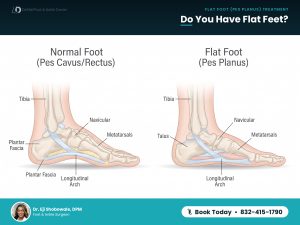
Differences between normal and flat feet, highlighting key anatomical features.
Flat feet, also known medically as pes planus, is a common condition affecting many individuals across all ages, particularly in Houston and Cypress. When the arches of the foot collapse or do not develop properly, it results in flat feet, which can lead to various complications if left untreated. In this article, we will explore flat feet treatment in Houston, discussing the causes, symptoms, treatments, and preventive measures. For those affected, knowing your options can help alleviate discomfort and improve mobility.
Causes of Flat Feet
There are multiple causes of flat feet, ranging from genetic factors to certain medical conditions. One of the most common causes is an inherited trait where a person is born without a developed arch. Another major contributor is injury or stress, particularly to the ligaments that support the arch. Conditions such as arthritis, diabetes, and obesity can also lead to the development of flat feet over time. Understanding these causes is crucial for effective flat feet treatment.
Recognizing the Symptoms
There are several symptoms associated with flat feet. Common complaints include aching in the feet, particularly after prolonged standing or activity. People may also experience swelling along the inside of the ankle or difficulty in finding comfortable shoes.
Posture and Gait Changes
Flat feet can alter one’s posture and gait, leading to further complications, such as knee, hip, or back pain. As the foot structure impacts the alignment of the entire body, individuals may unknowingly compensate for this misalignment.
The Importance of Early Detection
Detecting flat feet early is essential for preventing further complications. Parents should monitor their children and consult a podiatrist if they notice signs of discomfort or unusual walking patterns.
Available Treatment Options
If you’re seeking flat feet treatment in Houston, there are various options available depending on the severity of the case.
Conservative Treatments
Many patients benefit from conservative treatments, such as orthotic devices that support the arch of the foot. Custom-made orthotics can be provided by a podiatrist, improving foot mechanics and alleviating discomfort. Physical therapy exercises also play a crucial role and can include stretching and strengthening routines aimed at improving foot function. For chronic pain relief, nonsteroidal anti-inflammatory drugs (NSAIDs) may be recommended.
Surgical Options
In rare cases where flat feet lead to significant physical issues, surgical intervention may be necessary. Procedures can include fusing joints or reconstructing ligaments to improve arch support. However, surgery is typically considered only after exhausting non-invasive treatments.
Preventive Measures
Preventing flat feet involves proactive measures to keep your feet healthy. Choosing supportive footwear is crucial; look for shoes that provide adequate arch support. Maintaining a healthy weight also helps reduce the strain on your feet, minimizing the risk of developing flat feet or exacerbating existing issues. Regular exercise can strengthen the muscles in your feet, promoting better foot mechanics.
Lifestyle Adjustments
Adjusting your lifestyle can make a significant difference when managing flat feet. Swap out heels for supportive flats or sneakers, as they offer better arch support. Incorporating foot stretches and exercises into your daily routine can be beneficial. Focus on activities that strengthen the arch and improve overall foot function. Regular visits to a podiatrist in Houston can help to monitor foot health and make any necessary adjustments to treatment plans.
When to See a Doctor
Knowing when to consult a healthcare professional is essential for anyone experiencing flat feet symptoms. If you notice persistent pain or swelling, or if your ability to perform daily activities is hindered, it’s crucial to seek medical advice. An experienced podiatrist can provide a comprehensive assessment and recommend the best course of action for your condition, ensuring personalized flat feet treatment in Houston.
Conclusion
Flat feet can pose various challenges, but effective treatment options exist to alleviate pain and improve foot functionality. From conservative management to surgical intervention, individuals in Houston and Cypress can find appropriate care at DeNiel Foot & Ankle Center. Reach out for expert assistance in navigating flat feet treatment today to reclaim your comfort and mobility.
Common symptoms of flat feet include foot pain and swelling, particularly after long periods of standing or physical activity. Changes in posture and gait are also significant indicators of this condition.
What treatments are available for flat feet?
Treatments for flat feet can range from conservative measures like orthotics and physical therapy to surgical options in severe cases. Consulting a podiatrist is crucial for determining the best treatment approach tailored to individual needs.
When should I see a doctor for flat feet?
You should consult a doctor if you experience persistent pain, swelling, or changes in your walking pattern due to flat feet. An expert diagnosis can help in exploring potential treatment options.
Can flat feet be prevented?
While flat feet can be hereditary, you can take steps to help prevent complications by choosing proper footwear and maintaining a healthy weight. Regular foot exercises also contribute to strengthening the foot structure.
Is surgery always necessary for flat feet?
Surgery for flat feet is typically considered a last resort after non-invasive treatments have been exhausted. Most cases are effectively managed through conservative methods like custom orthotics and physical therapy.