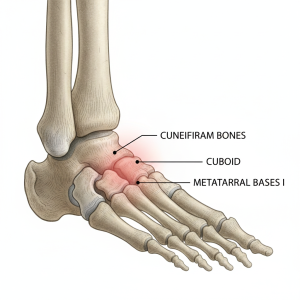
Illustration of the tarsometatarsal (Lisfranc) joint highlighting the cuneiform bones, cuboid, and metatarsal bases, with inflammation shown in the midfoot region.
The tarsometatarsal joint, often referred to as the Lisfranc joint, is a complex structure that plays a crucial role in foot function and mobility. Its importance cannot be overstated, as it connects the tarsal bones of the midfoot to the metatarsal bones of the forefoot. Understanding the anatomy, function, common injuries, and treatment options for the tarsometatarsal joint is essential for maintaining optimal foot health.
Understanding the Anatomy of the Tarsometatarsal Joint
The tarsometatarsal joint is comprised of several bones: the cuneiform bones (medial, intermediate, and lateral) and the cuboid bone, which articulate with the bases of the five metatarsals. This arrangement provides both stability and flexibility, allowing for efficient weight distribution and movement.
The Bone Structure
Cuneiforms: These three wedge-shaped bones help connect the midfoot to the forefoot.
Cuboid: Situated on the lateral aspect of the foot, it plays a key role in the overall alignment of the foot.
Metatarsals: The five long bones extending from the midfoot to the toes.
Each of these anatomical components works together to facilitate movement and absorb shock during activities such as walking, running, and jumping. This complex interaction allows the foot to adapt to various surfaces while maintaining balance.
Function of the Tarsometatarsal Joint
The primary function of the tarsometatarsal joint is to provide support and stability to the forefoot. It permits limited movement between the metatarsals and the midfoot, which is essential for effective gait dynamics. A well-functioning tarsometatarsal joint helps in the following ways:
Facilitates weight distribution across the foot during activities.
Aids in balance and stability by allowing for minor adjustments while walking or standing.
Contributes to the overall flexibility and adaptability of the foot on uneven surfaces.
According to research published by the NIH, an intact tarsometatarsal joint is vital for proper foot function and mobility. When this joint suffers an injury, it can significantly impact a person’s ability to walk and engage in physical activities.
Common Injuries to the Tarsometatarsal Joint
Tarsometatarsal joint injuries are often the result of trauma, such as fractures or sprains. The most common injury associated with this joint is a Lisfranc injury, which typically occurs from a fall, car accident, or sports injury. Symptoms of a tarsometatarsal joint injury may include:
Pain and swelling in the midfoot area.
Difficulty bearing weight on the affected foot.
Bruising or discoloration.
Visible deformity, in severe cases.
If you suspect you have a tarsometatarsal joint injury, it’s crucial to seek treatment promptly. Early diagnosis and appropriate intervention can prevent long-term complications. According to the American Podiatric Medical Association, diagnosis usually involves a physical examination and imaging studies, such as X-rays or MRI, to evaluate the extent of the injury.
Types of Lisfranc Injuries
Lisfranc injuries can be classified into different types, which can range from mild sprains to complete fractures. The classification typically includes:
Ligament Sprain: Damage to the ligaments supporting the joint without displacement.
Fracture-Dislocation: Fracture of one or more metatarsals along with dislocation at the tarsometatarsal joint.
Complete Lisfranc Injury: Severe injury involving the complete disruption of the joint.
Proper identification of the type of injury is essential for determining the appropriate treatment plan.
Treatment Options for Tarsometatarsal Joint Injuries
Treatment for tarsometatarsal joint injuries varies depending on the severity of the damage. Initial management usually focuses on reducing pain and swelling. The following options are commonly used in treatment:
Rest and Ice: Avoiding weight-bearing activities and applying ice can help reduce inflammation.
Elevation: Keeping the foot elevated can further decrease swelling.
Orthotics: A podiatrist may recommend custom orthotics or splints to support the injured joint.
Surgery: In severe cases, surgical intervention may be necessary to realign broken bones or repair damaged ligaments. According to the Cleveland Clinic, surgeries may involve the installation of screws or plates to stabilize the joint.
Post-surgical rehabilitation plays a fundamental role in recovery. A physical therapist can help restore mobility and strength to the joint, as well as address any issues related to overall foot function.
Preventing Tarsometatarsal Joint Injuries
While not all injuries can be prevented, certain strategies can minimize the risk of tarsometatarsal joint injuries. These strategies include:
Wearing appropriate footwear that provides support and cushioning.
Engaging in strength and flexibility training to maintain optimal foot function.
Avoiding activities that may place excessive stress on the midfoot.
The tarsometatarsal joint is vital to foot function and mobility. Understanding its role, common injuries, and treatment options can empower you to take better care of your feet. Whether you’re experiencing pain or simply want to maintain your foot health, consult a qualified podiatrist for a comprehensive assessment and personalized care plan. If you’re in the Houston or Cypress area, don’t hesitate to contact us for appointments. Let us help you keep your feet happy and healthy!