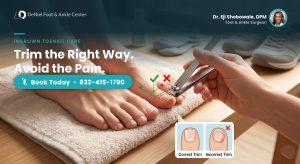
Person trimming their toenails straight across with clippers, beside a Correct vs. Incorrect Trim diagram showing how to prevent ingrown toenails — DeNiel Foot & Ankle Center.
The best way to avoid having ingrown toenails come back is to cut your toenails straight, wear comfortable shoes, take good care of your feet, and treat any conditions that may be causing them. The vast majority of cases where Ingrown toenail surgery Houston reappears are due to incorrect cutting of the nail, wearing narrow or tight shoes, repeated pressure on the toes, or naturally curved nails.
An ingrown toenail is one of the conditions that can happen to anyone. It occurs due to the growth of the nail edge inwards towards the flesh instead of growing outwards normally. Those who suffer from Ingrown toenail treatment normally have pain, inflammation, swelling, and tenderness in the region around their toenails. In some cases, infections occur making it difficult for people to move their feet.
While ingrown toenails are easy to deal with, the challenge is when they become recurrent. In many cases, recurring Ingrown toenail surgery Houston indicates that something should be done regarding the causes. Luckily, it is possible for one to know the causes of ingrown toenails and prevent them.
Why Do Ingrown Toenails Keep Coming Back?
Ingrown toenails which keep coming back occur because the causes of ingrown toenail are still persisting. In order to prevent ingrown toenail in the future, the causes of the condition have to be identified and corrected.
It is often surprising when a person suffers from an Ingrown toenail surgery Houston again even though he/she underwent treatment. Yet, the fact that an ingrown toenail keeps occurring is not unusual since the same nail keeps growing in the same way or the pressure on the foot keeps being exerted. One of the commonest causes of the condition is incorrect cutting of nails. People cut their nails too short and round up the corners which leads to an ingrown toenail.
Improper footwear also is one of the common causes ofIngrown toenail surgery Houston since tight-fitting shoes put pressure on the nail leading it to grow inwards. The condition is common in people wearing pointed or narrow dress shoes and athletic shoes.
There are some people who are genetically inclined to developing ingrown toenails. If you have curly or fan-shaped toenails, then there is a possibility that you will develop ingrown toenails since it makes it easy for your nails to grow inwards and cut the skin. The injury caused by your toes through playing sports or engaging in physical labor can also cause ingrown toenails.
Understanding the cause of the condition is the first step in avoiding its recurrence in the future.
How Should You Trim Your Toenails to Prevent Ingrown Toenails?
Ingrown toenail treatment correctly is one of the most essential actions for prevention of ingrown toenails. Trimming them straight ensures that the nails grow normally without piercing the adjacent skin areas.
Most of the cases with recurrent Ingrown toenail surgery Houston can be associated with improper trimming of nails. People try to round the edges of toenails making them look smoother, but such action increases the risk of growing them inward. As a result, when nail edges are rounded, the skin folds around them, trapping the nail as it grows.
Nails should always be cut straight with the help of clean and sharp nail clippers. The nail corners should stay visible and not be cut deep into the side areas of nails. It is also necessary to trim nails that are not too short. Those that are cut lower than the level of adjacent skin will grow into the flesh.
When your nails happen to be tough to clip, you can soak your feet in warm water first in order to make clipping easier. This will also help you avoid injuries. Nail files can be used after clipping in order to remove sharp edges of your nails without changing their shape. Regular nail care is considered one of the best ways to protect oneself from ingrown nails.
What Type of Shoes Help Prevent Ingrown Toenails?
The use of footwear with enough space for the toes reduces nail pressure and the surrounding skin. The selection of footwear is one of the most efficient means to avoid the development of an ingrown toenail.
Everyday footwear has great importance to the state of your foot health. Small shoes squeeze the toes and push the nail into the surrounding skin under pressure while walking, running, or even standing. With time, such repeated stress contributes to irritation and development of Ingrown toenail surgery Houston .
Footwear with a wide toe box gives the ability for toes to spread freely and does not put unnecessary pressure on the toenails and surrounding skin. It is desirable that such shoes have good breathability since it helps to regulate moisture in the feet.
Those who practice some sport need to be very attentive to shoe sizes. Sports shoes that do not fit well can constantly squeeze the toes while moving and make them injured. Regular replacing of old footwear is needed.
Footwear Comparison for Ingrown Toenail Prevention
Footwear Feature
Benefit for Toenail Health
Wide Toe Box
Reduces pressure on toenails
Breathable Material
Helps control moisture
Proper Fit
Minimizes friction and irritation
Cushioned Sole
Reduces repetitive impact
Arch Support
Improves overall foot mechanics
Selecting supportive footwear and Ingrown toenail treatment is a simple but highly effective strategy for preventing ingrown toenails from returning.
How Does Foot Hygiene Help Prevent Ingrown Toenails?
Good hygiene practices for the feet lead to healthy skin and nails, as well as reduce the risks of infection and inflammation. Healthy and clean feet ensure healthy nail growth.
Healthy feet require more care than simply washing them. Regular hygiene habits help prevent the irritation, softening, and infection of the skin surrounding the nail. When the skin around the toenail remains healthy, the nail is less likely to grow into the surrounding tissue and become trapped. This simple daily care routine can make a significant difference in preventing recurring ingrown toenails.
Daily foot washing should always involve soap and warm water. Bacteria, sweat, and other debris can contribute to inflammation, making proper cleansing an important part of foot care. After washing, always remember to dry your feet thoroughly, especially between the toes, where moisture can accumulate and create an environment for irritation.
The use of clean socks and comfortable shoes is necessary. These help keep the feet dry throughout the day, which is particularly beneficial for people who sweat excessively. Proper footwear not only supports foot health but also reduces unnecessary pressure on the toes. Individuals recovering from foot procedures, including Toe shortening surgery, should be especially mindful of maintaining good foot hygiene and wearing appropriate footwear to support healing and overall foot health.
Checking your feet regularly will allow you to notice the early signs of an ingrown toenail before it becomes painful or infected. Always remember that small things don’t turn into big things when they are addressed early.
Can Certain Medical Conditions Increase the Risk of Recurring Ingrown Toenails?
There are a number of medical conditions which can predispose an individual to develop recurrent ingrown toenails as they affect either the growth of the nails, their blood circulation or skin condition. Proper management of these conditions is very vital in prevention of the problem. Medical conditions can make some people prone to foot and nail problems. One such medical condition is diabetes as it affects the circulation and sensitivity of the feet. An ingrown toenail becomes a very serious problem when it is ignored.
A fungal infection of the nails can also be a contributing factor to recurrent ingrown toenails. This will cause the nail to become thick and deformed leading to growth abnormalities. Sweating too much can soften the skin around the toe and this will make it easy for the nail to grow into the skin. Foot deformities and biomechanical abnormalities can lead to uneven distribution of weight on the toe nails as one stands or walks and this can change the nail growth pattern.
How Can Athletes Prevent Ingrown Toenails?
Those who play sports are at greater risk of having ingrown toenails because the toes experience constant pressure/trauma from the repetitive activity. Taking care of the nails, wearing the correct shoes with proper fit, and preventing injury can help to prevent them fro coming back. Each of the three sports/physical activities that can be played can place specific demands on the toes. The action of running/jumping and the ability to stop and change direction frequently puts force on the toes again each & every time (i.e., overuse). After a while, the pressure builds and can irritate the nail bed, thus causing future Ingrown toenail surgery Houston.
To help avoid getting ingrown toenails, athletes must find a good fitting pair of shoes that have enough room in the toe area, but not too much movement inside the shoe. The shoes must fit snugly, but comfortably and help to keep the toes from being impacted due to frequent force. The use of moisture-wicking socks can also help to minimize sock friction and keep the feet dry and healthy when playing.
Routine nail maintenance is equally important. It is recommended that toenails are trimmed correctly and looked at frequently (i.e. for signs of irritation).In case there is any injury on the foot, the condition needs to be handled promptly in order for the growth of the toenail to remain normal in the future. The athletes can prevent themselves from developing ingrown toenails again in the future by adhering to the proper care of their feet.
When Should You See a Foot Specialist for Recurring Ingrown Toenails?
In case of persistent or recurrent ingrown nails, one should visit a doctor because the problem requires professional treatment. It will help avoid infection, chronic pain, and damage to the nail.
Even though a mild ingrown toenail can heal at home, frequent ingrown toenail recurrence is a sign that something is wrong and a doctor is needed. In case if preventive measures do not help with the pain and redness and swelling increase, it is necessary to see a foot specialist.
The conditions which suggest that one should seek professional treatment are drainage, pus, increased tenderness, difficulty walking, and frequent recurrences of the condition in one particular toenail. The foot specialist will find out the reasons for such recurrence and will help solve the problem. Depending on the case, the specialist can use both conservative treatment methods and procedures that will remove the problematic part of the nail completely.
What Are the Most Effective Long-Term Strategies for Preventing Ingrown Toenails?
Prevention over the long term entails consistency. Correct nail trimming, the right type of shoes, proper hygiene, and foot monitoring combine in order to ensure minimal recurrence of ingrown toenail and healthy nail formation.
In most cases, preventing ingrown toenail is not a one-time activity but rather the development of daily habits which will contribute to healthy nail formation and will minimize the stress on the toes. Those who properly trim their nails, wear the appropriate footwear and have clean feet do not experience the recurrent problems.
It is necessary to change the old shoes, treat fungi infection on time and use protective equipment for feet when participating in sport or other physical activities. Regular monitoring of feet enables them to detect any problems at an early stage of development.
For people who suffer from certain chronic diseases and had serious cases of ingrown toenails in the past, regular visits to a foot specialist may be quite useful. It helps to determine the potential problems and prevent them. Proper nail care, wearing appropriate shoes, hygiene and early detection of problems constitute the best defense against the recurrence of ingrown toenails.
Conclusion
The prevention of the recurrence of ingrown nails lies in knowing what causes such problems and dealing with those factors. Appropriate cutting of toenails, wearing appropriate shoes, regular foot hygiene, and treatment of associated disorders can greatly contribute to preventing such problems in the future. Although it is possible that occasional occurrence of the problem may be beyond your control, the recurrent occurrence of the problem means that the cause of the problem can be determined and thus eliminated.
In case there are still recurrent occurrences ofIngrown toenail surgery Houston , it will be important to get professional help in order to find out what the underlying causes of the problem are. You can find skilled medical personnel at Deniel Foot and Ankle Center who can offer you effective treatment for your problem.
Frequently Asked Questions
Q1. What is the main cause of recurring ingrown toenails?
Incorrect toenail clipping is one of the most frequent reasons why ingrown toenails keep coming back. Clipping the nails too short or rounding them leads to growth inside the skin. Also, wearing tight shoes and hereditary nail shapes play a role in recurrence.
Q2. Can ingrown toenails be prevented permanently?
Many ingrown toenails can be avoided with correct foot care. Regularly clipping the nails straight across, wearing comfortable shoes, and practicing proper hygiene help prevent this problem. In serious situations, professional treatment can help solve the issue permanently.
Q3. Are tight shoes really responsible for ingrown toenails?
Yes. Tight shoes apply continuous pressure to the toes and may push the edge of the nail into the skin. It will increase the chances of inflammation, pain, and recurrent Ingrown toenail treatment Houston with time.
Q4. How often should I trim my toenails?
Most individuals need to clip their toenails once every four to six weeks, depending on how quickly their nails grow.
Q5. Can a foot specialist stop ingrown toenails from coming back?
A foot specialist can find out what causes recurring ingrown toenails and offer solutions for the treatment. Sometimes, performing a specific procedure allows getting rid of the issue forever.