The right shoe size isn’t a luxury — it’s foot health. Learn how to measure accurately and avoid common sizing mistakes.
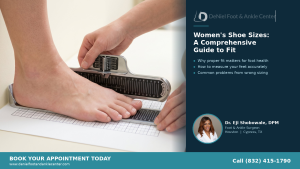
Choosing the right shoe size is essential for comfort and foot health, especially for women. Many factors can influence shoe sizes, such as foot shape, lifestyle, and brand differences. This guide will delve into the intricacies of women’s shoe sizes, helping you make well-informed decisions when shopping for footwear.
Foot health plays a vital role in daily comfort, mobility, and long-term wellness. For many women, foot issues can become increasingly common due to lifestyle, footwear choices, medical conditions, and biomechanics. When these problems are left untreated, they can limit activity, impact posture, and lead to chronic pain. Understanding the most common Foot problems for women in Houston residents often face can make early detection and treatment easier and more effective.
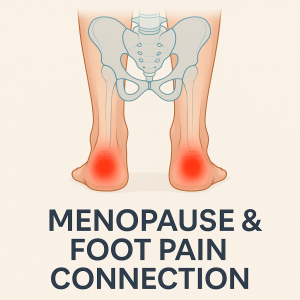
Menopause affects more than hormones—it can trigger foot pain and strain your pelvic floo
Menopause is a major transition for many women. Along with hot flashes and mood changes, foot pain is often overlooked. Those sore, achy feet aren’t just an inconvenience, they signal changes in your body. Ignoring menopausal foot pain can put your pelvic floor health at risk.
So, how exactly does menopause affect your feet? And why should you worry about the pelvic floor when your arches flatten or your heels start to crack?
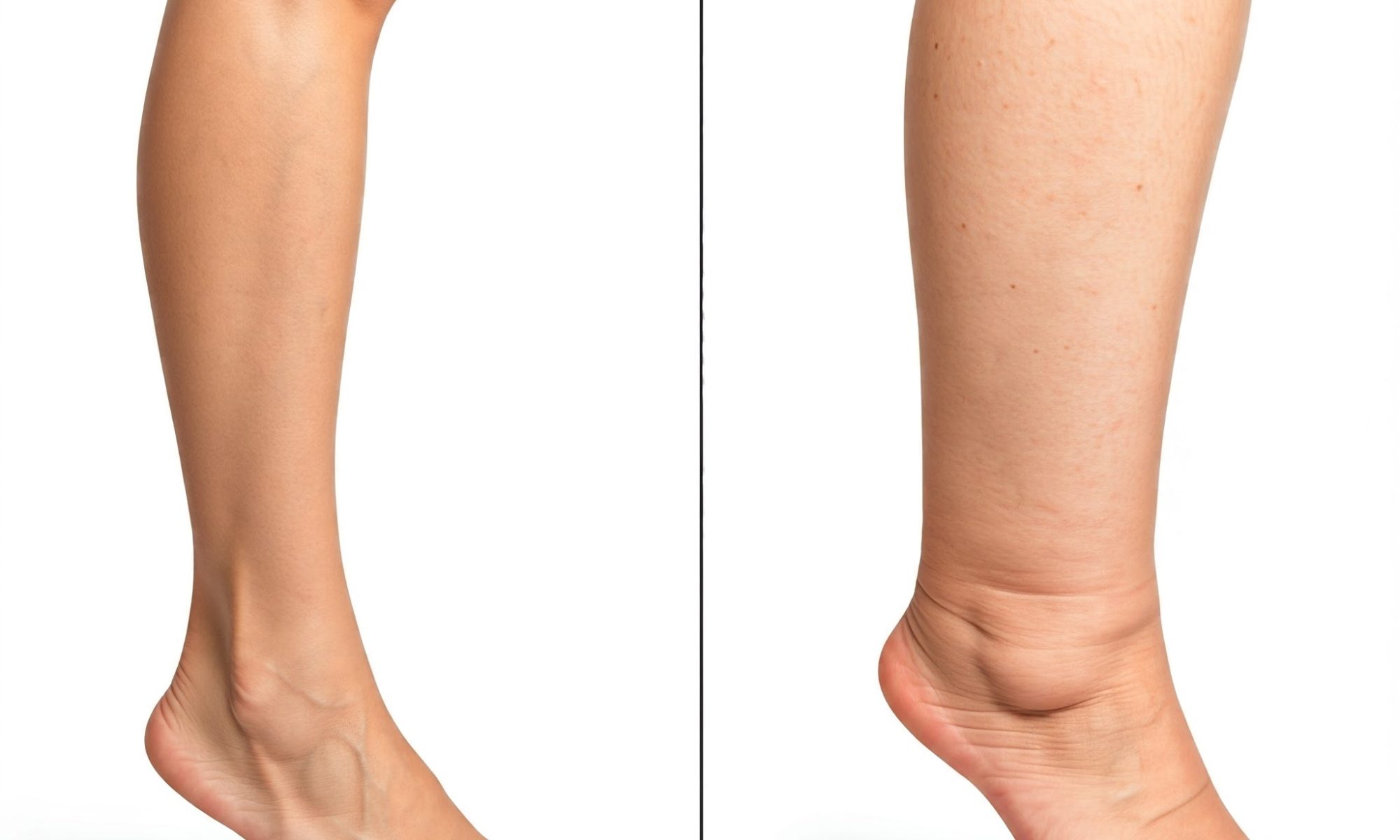
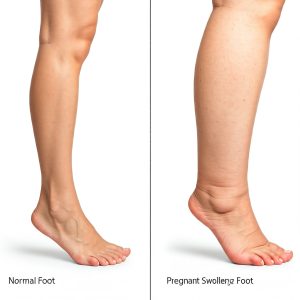
A normal looking foot compared to a swollen foot due to pregnancy
Pregnancy is an exciting journey, but it also brings various physical changes, especially to your feet and ankles. Many pregnant women experience swelling and discomfort, particularly in the lower extremities. Understanding why this happens and how to manage it can make a significant difference in your comfort.
If you spend all day standing or walking a lot, you are at a higher risk for heel pain. Factory workers, teachers, and other occupations that are always on their feet are especially vulnerable. They would come to the clinic and complain about a stabbing pain that is usually worse in the morning. The pain normally subsides as they get up and move, but it might return after extended periods of standing or when they stand up after sitting.
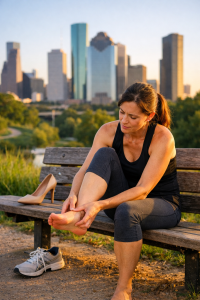
Statistics show that one of the major factors leading to foot problems is wearing high heels. A third of the women suffer from permanent problems due to prolonged wear of high heels. High heels are fashionable, make you feel sexier and taller, but impaired stability increases the risk of forefoot injury, toe injury, heel pain, foot arch strain, sprained ankles, plantar fasciitis, posture, and gait problems. In addition, there is excess stress placed on the lower extremities and back and affects the balance, posture, and gait.



 If you spend all day standing or walking a lot, you are at a higher risk for
 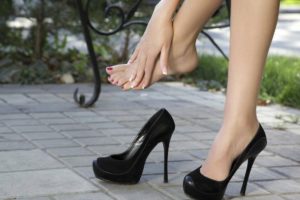 Statistics show that one of the major factors leading to foot problems is wearing high heels. A third of the women suffer from permanent problems due to prolonged wear of high heels. High heels are fashionable, make you feel sexier and taller, but impaired stability increases the risk of forefoot injury,