1. What’s the difference between a corn and a callus?
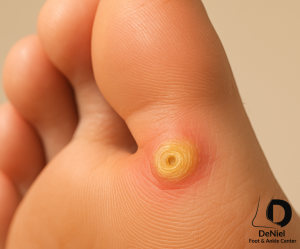
A corn is a small, deep area of thickened skin caused by
Close-up foot corn
focused pressure—typically on or between the toes. They often have a hard core and can be quite painful. A callus is a larger, flatter area of thickened skin that develops on weight-bearing surfaces like the heel or ball of the foot. Calluses are usually less painful.
2. What causes corns and calluses?
Both develop from friction or pressure, but for different reasons:
Corns: tight shoes, heel height, toe deformities (like hammertoes), pressure between toes.
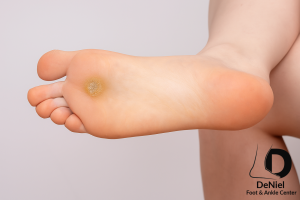
Calluses: walking or standing for long periods, barefoot
Foot with callus close-up
walking, flat feet or high arches, poorly cushioned shoes.
3. Do corns and calluses need treatment?
Yes—especially if they’re painful or keep coming back. Corns often require removal of the central core, while calluses respond to pressure reduction and regular medical debridement.
4. Are corns and calluses the same as warts?
No. Plantar warts are caused by a virus and have tiny black dots and pain with side-to-side pressure. Corns and calluses are simply thickened skin from pressure.
5. How does a podiatrist treat corns and calluses?
At DeNiel Foot & Ankle Center, treatment may include:
No. Cutting them yourself increases the risk of infection, especially if you have diabetes or circulation problems. Professional care is safest and most effective.
7. When should I see a podiatrist?
You should schedule a visit if:
You have pain when walking
The corn or callus keeps returning
You notice redness, swelling, drainage, or cracking
You have diabetes
You’re unsure whether it’s a wart, corn, or callus
8. How can I prevent corns and calluses?
Wear shoes with a wide toe box
Avoid high heels when possible
Use cushioned insoles or orthotics
Moisturize feet daily
Address biomechanical issues early
9. Can custom orthotics help?
Yes. By redistributing pressure across the foot, orthotics can eliminate the repetitive friction that causes both corns and calluses. They are one of the best long-term prevention tools.
10. Do corns ever go away on their own?
Corns rarely disappear without removing the source of pressure. They often come back until the underlying problem—such as a hammertoe or tight footwear—is corrected.