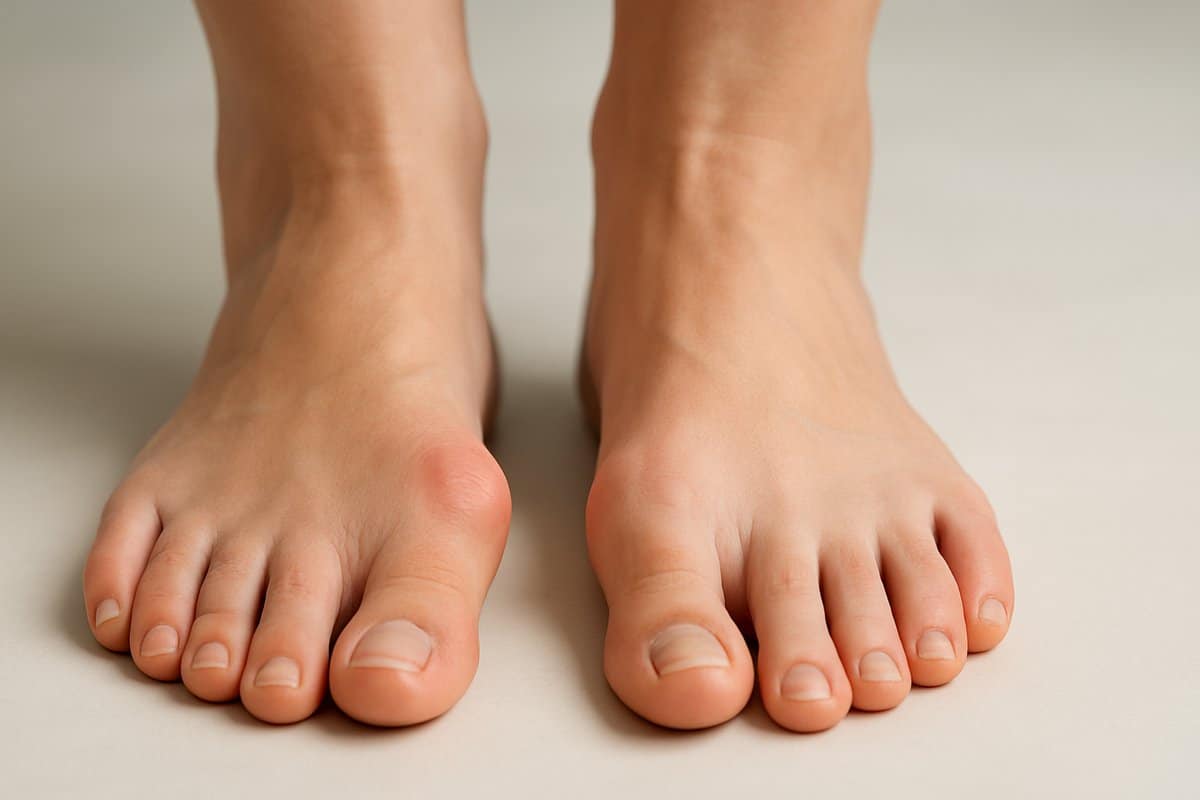
A bunion is a bony bump at the base of the big toe that angles the toe inward.
Short answer: Bunions are usually caused by inherited foot mechanics. The first metatarsal bone shifts, causing a bulge and the big toe to lean toward the second toe. Custom orthotics can address these mechanics. If you notice a bump developing, seeking early treatment can prevent further issues.
Understanding Bunions
Bunions form when the joint at the base of the big toe sticks out, often because the big toe pushes against the second toe. This can make your foot look like it has a noticeable bump on the side. This happens when the first metatarsal bone shifts and rotates outward. The skin over this area might become red, sore, and tender due to constant friction against shoes. Bunions aren’t just unsightly bumps; they are caused by changes in the foot’s bone structure, leading to a visible protrusion.
Causes of Bunions
Most bunions are linked to inherited foot mechanics, so if your parents or grandparents had them, you might too. Conditions like flat feet, flexible ligaments, or arthritis can add stress to the joint, making bunions more likely to appear. Wearing tight or narrow shoes, high heels, or those that force the toes into an uncomfortable position can speed up the process by increasing pressure on the joint. With each step, these poor mechanics worsen the bunion as the toes are forced into misalignment, making daily activities painful and challenging.
Managing Bunions at Home
Although you can’t change your genetics, there are practical steps you can take at home to alleviate bunion discomfort. Choose shoes with a wide toe box and proper arch support to minimize pressure on the bunion. Avoid high heels and shoes that squeeze your toes together. To relieve pain, cushion the bunion with over-the-counter pads and use ice packs on the bunion for 15-20 minutes a few times a day to reduce swelling and pain. Over-the-counter pain relievers like ibuprofen can help reduce discomfort and inflammation. Some find relief by soaking their feet in warm water with Epsom salts, which can aid in relieving tension and soreness.
Treatments for Bunions
Addressing bunions as soon as they start forming is crucial. Our podiatrists can assess your feet and craft custom orthotics tailored to your needs. These orthotics can redistribute pressure to lessen the mechanical forces causing the bunion, thus slowing or preventing its progression. In severe cases where bunions cause significant pain or mobility issues, surgery might be necessary. Surgical options include realigning the toe to correct the deformity, using minimally invasive techniques to reduce recovery time and improve the outcome. Our practice uses the latest methods to ensure the best results.
When to see a podiatrist
Persistent pain affecting your daily activities or quality of life
Noticeable swelling, redness, or warmth around the bunion
Trouble finding shoes that fit comfortably due to the bunion
No improvement with home treatment, including ongoing or worsening pain
Possible signs of infection, especially if you have diabetes or poor circulation
Tackling bunion problems early can prevent more severe foot issues and help maintain comfort. If you’re experiencing bunion symptoms or want a thorough evaluation, visit the DeNiel Foot & Ankle Center for expert care and guidance. Our podiatry team in Houston is here to help you discover the best treatment options for your foot health.