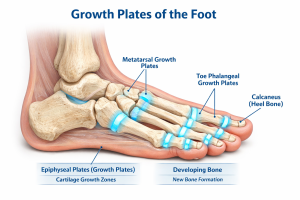
Growth plates (epiphyseal plates) in a child’s foot
The growth plates of the foot, also known as epiphyseal plates, are crucial components of pediatric and adolescent development. Located at the ends of long bones, these plates enable bones to lengthen as children grow. In this article, we’ll delve into the anatomy, function, potential issues, and treatments related to growth plates of the foot.
Anatomy of Growth Plates
Growth plates are made of cartilage and are found in various locations in the skeletal system, including the foot. Specifically, the metatarsal bones and phalanges contain these growth plates. They serve as zones where new bone tissue is produced until the plates harden, a process known as epiphyseal closure. According to the NIH, this typically occurs by the late teens to early twenties, depending on the individual.
Location and Structure
The growth plates in the foot are located at the ends of the long bones, specifically at the base of the metatarsals and the tops of the toe bones (phalanges). Each growth plate contains a layer of cartilage that grows and divides to elongate the bone, a crucial feature during childhood and adolescence.
Function of Growth Plates
The primary function of the growth plates is to facilitate bone growth. This allows children not only to grow taller but also to develop proper foot structure, which is vital for mobility and posture. Research from the American Orthopaedic Foot & Ankle Society indicates that healthy growth plates lead to properly aligned foot bones, crucial for foot function.
Bone Growth Process
On a cellular level, the growth plates consist of chondrocytes, specialized cells that produce cartilage. As a child grows, these cells multiply, and the resulting new cartilage is converted into bone, making the bones longer and stronger. The growth rate can be influenced by hormonal changes during puberty and other factors like nutrition and physical activity.
https://denielfootandanklecenter.com/the-reason-why-kids-shoes-cant-be-sized-upCommon Disorders Related to Growth Plates
While growth plates perform essential functions, they can also be vulnerable to various injuries and conditions.
Growth Plate Injuries
Injuries to the growth plates are common among active children. A fracture in this area may stunt growth or lead to deformities. Typically seen in sports, these injuries require careful management and a proper diagnosis to prevent long-term complications.
Sever’s Disease
Sever’s Disease, or calcaneal apophysitis, is a painful injury affecting the heel’s growth plate. This condition is often seen in active children and adolescents engaged in sports that involve running and jumping. Symptoms include heel pain and tenderness, especially after activity, and rest and physical therapy are usually recommended treatments.
Osgood-Schlatter Disease
Though primarily associated with the knees, Osgood-Schlatter disease can indirectly impact the alignment and function of the foot as well. This condition occurs when the growth plate at the tibial tuberosity becomes inflamed. According to the Mayo Clinic, it often leads to leg pain, especially in active adolescents.
Recognizing Symptoms and Seeking Treatment
Awareness of symptoms related to growth plate issues is essential for early diagnosis and treatment.
Signs to Watch For
Common symptoms of growth plate disorders include:
Pain and tenderness in a specific area of the foot
Swelling around the growth plate
Difficulties with walking or running
Changes in foot structure, observed as flat feet or high arches
If your child exhibits these symptoms, it’s crucial to consult a foot specialist for an accurate diagnosis.
Diagnostic Techniques
Your foot specialist will likely perform a physical examination and may recommend imaging tests, such as X-rays, to evaluate the condition of the growth plates. Radiographic images can provide valuable insights into bone growth and the presence of any injuries.
Conclusion: Importance of Monitoring Growth Plate Health
Understanding the growth plates of the foot is essential for parents, coaches, and healthcare providers. Being aware of their role and potential issues can help prevent long-term complications. Children’s feet should be monitored closely during their growth years, and any concerning symptoms should be addressed promptly. If you have questions regarding your child’s foot health or if you suspect an issue with their growth plates, our experienced team in Houston and Cypress is ready to help. Contact us today for an appointment!
Our Houston and Cypress podiatry team is committed to helping you move comfortably and prevent future foot problems. Call (832) 415-1790 or schedule online at www.denielfootandanklecenter.com.