Let’s be honest—kids’ feet are tiny, sweaty superheroes. They withstand playground battles, endless soccer games, and the infamous “I’ll-just-jump-off-this-couch” maneuvers. Here’s the thing: while we obsess over their shoes, we often forget that what goes inside and around those shoes matters as much.
As a Houston podiatrist and mom, I’ve seen it all—from blisters that could rival a marathon runner’s to dry, cracked heels that make even the toughest kiddos wince. The good news? Keeping those little feet happy boils down to three simple steps: the right shoes, smart washing habits, and a dash of moisturizing.
So, let’s dive into pediatric foot care, the ultimate trifecta for healthy kids’ feet—because no one wants a summer of stinky sneakers or preventable foot woes.
Step 1: The Shoe Check (Because Fit is Everything!)
Ah, the shoe-size mystery! Kids’ feet are masters of disguise—they can cram into tight shoes without a peep because their cartilage is soft and moldable.
Here’s what to watch for:
The Thumb Test: Have your child stand in their shoes. Press down near the toes—there should be a thumb’s width of space between the longest toe and the shoe’s end. Less than that? It is time for a size-up.
Houston Heat Hack: Our sticky summers mean sweaty feet, which lead to blisters. Look for breathable materials such as mesh or natural leather to keep things airy.
The “Bend It Like Beckham” Test: Grab the shoe and try to bend it. If it doesn’t flex easily at the ball of the foot, it’s too stiff for developing feet.
Step 2: The Wash & Dry Routine (Where Most Parents Slip Up!)
Oh, absolutely. Kids’ feet sweat twice as much as adults and when you mix that with Houston humidity, you’ve got a recipe for funk and foot infections.
How to keep things fresh:
The Toe Patrol: Turn bathing into a game. Have your kiddo “inspect” their toes for redness, peeling, or blisters. Make it fun—give them a magnifying glass and let them play “foot detective.”
Dry Like a Pro: Moisture loves to hide between toes leading to athlete’s foot. Teach your child to dry thoroughly. If they’re little, help them out—it takes two seconds and saves a world of itchiness.
Sock Swap: Cotton socks are a no in summer. Opt for moisture-wicking fabrics to keep feet dry, especially for active kids.
Houston Reality Check: Pool days equals extra foot care. Chlorine dries the skin, so rinse the feet after swimming and moisturize to prevent cracks.
Step 3: Kids Need Foot Cream Too!
Is foot cream necessary while their skin is soft?
Surprise—kids get dry, cracked heels too, especially, here in Houston, where flip-flops and pool days reign supreme. Here’s how to keep their soles smooth:
When to Lube Up: Look for rough patches or redness, especially on heels. If their skin feels like sandpaper, it’s time for cream.
What to Use: Skip the heavily scented lotions, use plain petroleum jelly, or a gentle, fragrance-free baby lotion.
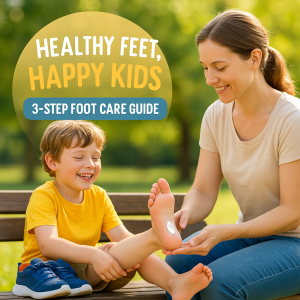
The Overnight Trick: Apply the foot cream before bed and wear socks. By morning, their feet will be baby-soft again.
If your kiddo hates lotion, turn it into a “spa night.” Let them pick a fun-smelling (but gentle!) cream and make it a bonding ritual.
When to Call a Houston Podiatrist
Even with the best care, sometimes feet need professional help. Watch for:
Ingrown toenails (red, swollen, or painful toes).
Persistent rashes or peeling that won’t go away with OTC creams.
Complaints of pain during walking or sports.
At Deniel Foot & Ankle Center, we keep Houston families on their feet. Whether it’s a quick check or tackling a stubborn foot issue, we’ve got you.
Final Thought: Kids’ feet are their foundation—for running, jumping, and conquering the world. With these three simple steps, you’ll keep them strong, healthy, and ready for whatever adventure comes next.
👉 Want a free “Kid Foot Care Checklist”? Comment “FEET” below, and we’ll send it your way!
[…] Growth plates are made of cartilage and are found in various locations in the skeletal system, including the foot. Specifically, the metatarsal bones and phalanges contain these growth plates. They serve as zones where new bone tissue is produced until the plates harden, a process known as epiphyseal closure. According to the NIH, this typically occurs by the late teens to early twenties, depending on the individual. […]



Comments
[…] Growth plates are made of cartilage and are found in various locations in the skeletal system, including the foot. Specifically, the metatarsal bones and phalanges contain these growth plates. They serve as zones where new bone tissue is produced until the plates harden, a process known as epiphyseal closure. According to the NIH, this typically occurs by the late teens to early twenties, depending on the individual. […]
Comments are closed.