How Do I Know If My Toe Is Broken or Just Sprained?
When you stub your toe or experience pain in that area, the first question that often arises is, ‘How do I know if my toe is broken or just sprained?’ In Houston and Cypress, TX, many people encounter this common issue, and understanding the differences between a sprain and a fracture can be crucial for receiving the right treatment. Both injuries can cause significant discomfort, swelling, and limited mobility. However, knowing how to differentiate between a broken toe and a sprained toe can help determine your next steps and treatment plan.
Understanding the Role of a Foot and Ankle Specialist in Houston
When it comes to maintaining foot and ankle health, residents of Houston and Cypress, TX, have access to skilled podiatrists. These specialists are crucial in diagnosing and treating various conditions that can affect mobility and quality of life. If you’ve been experiencing issues with your feet or ankles, understanding the scope of services a foot and ankle specialist Houston can provide is essential.
Plantar fasciitis is a common condition that affects many individuals, causing debilitating heel and foot pain. In Houston and Cypress, the prevalence of this condition often leads to discomfort that can significantly impact daily activities. Understanding how to prevent plantar fasciitis from coming back is essential for maintaining an active lifestyle. This article delves into effective strategies and preventive measures to ensure you can enjoy pain-free feet for years to come. Whether you’re recovering from an episode or looking to avoid future flare-ups, a comprehensive approach is vital.
Supination of the foot, often referred to as under-pronation, occurs when the foot rolls outward during movement, placing excess weight on the outer edge. This condition can lead to various complications if left untreated, especially for those living in Houston and Cypress, where an active lifestyle is prevalent. Awareness of supination of foot symptoms is crucial for early intervention and maintaining overall foot health. In the greater Houston area, many individuals may experience issues related to supination due to high activity levels and sports involvement. Recognizing symptoms early can lead to timely treatments that alleviate discomfort and prevent further complications.
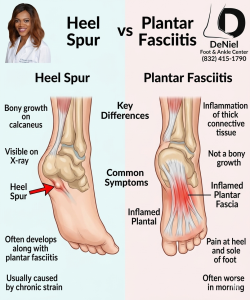
Heel Spur vs Plantar Fasciitis: Understanding the Differences
Don’t let heel pain slow you down! Is it a spur or fasciitis? Finally get the answer and a personal plan for relief. Call DeNiel Foot & Ankle Center now to reclaim your active life!
If you’re experiencing heel pain, you might be wondering whether you have a heel spur or plantar fasciitis. Both conditions can cause significant discomfort and impact your daily activities, but they are distinct issues that require different approaches for effective treatment. In Houston and Cypress, many patients seek solutions for these common foot problems, making it essential to understand the differences between heel spurs and plantar fasciitis. Heel spurs are bony growths that develop on the underside of the heel bone, often associated with conditions like plantar fasciitis. Conversely, plantar fasciitis involves inflammation of the plantar fascia, the thick band of tissue running across the bottom of your foot. Knowing these distinctions can help you choose the right path for relief.