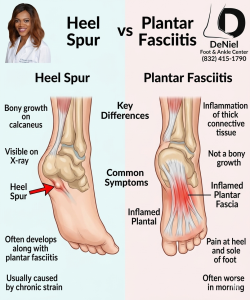
Heel Spur vs Plantar Fasciitis: Understanding the Differences
Don’t let heel pain slow you down! Is it a spur or fasciitis? Finally get the answer and a personal plan for relief. Call DeNiel Foot & Ankle Center now to reclaim your active life!
If you’re experiencing heel pain, you might be wondering whether you have a heel spur or plantar fasciitis. Both conditions can cause significant discomfort and impact your daily activities, but they are distinct issues that require different approaches for effective treatment. In Houston and Cypress, many patients seek solutions for these common foot problems, making it essential to understand the differences between heel spurs and plantar fasciitis. Heel spurs are bony growths that develop on the underside of the heel bone, often associated with conditions like plantar fasciitis. Conversely, plantar fasciitis involves inflammation of the plantar fascia, the thick band of tissue running across the bottom of your foot. Knowing these distinctions can help you choose the right path for relief.
Causes of Heel Spurs and Plantar Fasciitis
Both heel spurs and plantar fasciitis can arise due to similar factors, but their underlying causes differ. Heel spurs typically develop as a result of ongoing stress and strain on the heel bone, often caused by activities like running or walking on hard surfaces. Over time, this stress can lead to calcium deposits, forming a bony protrusion. On the other hand, plantar fasciitis is primarily caused by excessive tension placed on the plantar fascia. This tension might stem from inadequate footwear, obesity, or repetitive activities. Hiking or running, especially on uneven surfaces, can exacerbate the condition.
Risk Factors for Development
Several factors can increase your risk of developing heel spurs or plantar fasciitis:
Being overweight places extra stress on your feet.
Age can also be a contributing factor, as plantar fasciitis is more common in middle-aged individuals.
Certain sports, like running and jumping, put repeated strain on the heel.
Flat feet or high arches can alter your foot mechanics, potentially leading to these conditions.
Symptoms of Heel Spurs and Plantar Fasciitis
The symptoms of heel spurs and plantar fasciitis can often overlap, but some specific signs may help you differentiate between the two. Patients with plantar fasciitis typically experience sharp pain in the heel, especially during the first steps in the morning or after sitting for extended periods. The pain may diminish with activity but return after prolonged periods of standing or walking. In contrast, heel spurs themselves might not cause pain. Instead, the discomfort usually arises from the surrounding soft tissues, especially if they have become inflamed due to the spur. Patients often report pain in the heel area, particularly when standing or walking.
Identifying Pain Points
To help identify the source of your heel pain, consider the following:
Heel spur pain is often felt directly at the site of the bony growth.
Plantar fasciitis pain usually emerges along the arch of the foot and is more prominent in the morning.
Treatment Options for Heel Spurs and Plantar Fasciitis
Treatment options for heel spurs and plantar fasciitis can vary based on the severity of the conditions. For plantar fasciitis, initial treatments often focus on reducing inflammation and relieving pain. Popular methods may include:
Rest and ice on the affected area.
Over-the-counter pain relievers may help relieve discomfort.
Stretching exercises targeting the plantar fascia and Achilles tendon.
Custom orthotics or insoles for heel spurs can provide essential support and cushioning.
When it comes to heel spurs, while conservative treatments are also recommended, in some cases where pain is persistent and debilitating, a medical professional might suggest more invasive procedures. These can include corticosteroid injections or even surgery as a last resort.
Physical Therapy
Physical therapy plays a vital role in both conditions. A trained professional can help you strengthen the muscles in your feet and legs, improving flexibility and function. This approach is especially beneficial for those with plantar fasciitis, as it attacks the source of inflammation and pain.
Prevention Techniques
Prevention is key in managing heel pain. To reduce your risk of developing heel spurs or plantar fasciitis, consider the following strategies:
Choose supportive footwear that provides adequate arch support and cushioning.
Gradually increase your level of physical activity, especially if you’re starting a new exercise regimen.
Maintain a healthy weight to lessen the burden on your feet.
Engage in regular stretching exercises to enhance flexibility in your feet and legs.
When to See a Doctor
If you notice persistent heel pain that doesn’t improve with home treatment, it’s important to consult a podiatrist. Symptoms such as swelling, a visible bony growth, or pain that interferes with daily activities may require further examination. A professional at Houston Podiatry can accurately diagnose whether you have a heel spur or plantar fasciitis and recommend an appropriate treatment plan tailored for you.
Conclusion
Understanding the differences between heel spurs and plantar fasciitis is crucial for effective treatment. With proper care and timely intervention, you can alleviate pain and get back on your feet. If you’re seeking relief in Houston or Cypress, consider visiting the DeNiel Foot & Ankle Center. Our expert team is dedicated to providing personalized care for your foot health.
What is the difference between heel spur vs plantar fasciitis?
Heel spur vs plantar fasciitis are often confused due to their similarities in symptoms. However, heel spurs are bony growths at the base of the heel, while plantar fasciitis involves inflammation of the band of tissue on the foot’s bottom.
What are the common symptoms of plantar fasciitis?
Common symptoms of plantar fasciitis include sharp heel pain, especially in the morning or after long periods of sitting. This pain usually decreases with activity but can return after prolonged standing.
When should I see a doctor for heel pain?
If you experience persistent heel pain that doesn’t improve with home remedies, it’s time to see a doctor. Symptoms like swelling, a visible bump, or pain during daily activities warrant professional evaluation.
What treatments are available for heel spur vs plantar fasciitis?
Treatment for heel spur vs plantar fasciitis can include physical therapy, custom orthotics, anti-inflammatory medications, and in severe cases, injections or surgery. Early intervention typically leads to better outcomes.
Can physical therapy help with heel spur and plantar fasciitis pain?
Yes, physical therapy can be very effective for both heel spur and plantar fasciitis pain. A trained therapist can provide exercises to improve flexibility and strength, addressing the underlying issues causing your discomfort.