Can a Podiatrist Treat Heel Pain? Understanding Your Options
Heel pain is a common problem for many individuals, especially in bustling cities like Houston and Cypress. If you’re wondering can a podiatrist treat heel pain, the answer is a resounding yes! Podiatrists are specialists trained to diagnose and treat a range of conditions affecting the feet and ankles, including various types of heel pain.
Understanding the source of heel pain is crucial, as it can stem from various underlying issues. From plantar fasciitis to heel spurs, knowing the cause will help you work with your podiatrist to find the best course of treatment.
Understanding Morning Heel Pain in Houston and Cypress
Heel pain in the morning is a common complaint among individuals, particularly in Houston and Cypress. Many who experience this discomfort notice it most acutely within the first steps they take after rising from bed. This often leads to questions about the underlying causes and potential treatments available. Understanding what causes heel pain in the morning is crucial for effective management and treatment. Early diagnosis ensures that appropriate interventions can be made to alleviate the discomfort, assisting individuals in regaining their mobility and enhancing their quality of life.
That sharp, stabbing heel pain in the morning is one of the most common signs of plantar fasciitis — and it’s a signal your feet need attention. Heel pain can also stem from heel spurs or Achilles tendinitis, so getting the right diagnosis matters.
Heel pain is a common complaint that can severely affect daily activities and overall quality of life. For many residents in Houston and Cypress, the discomfort can stem from various foot conditions, predominantly impacting movement. If you’re experiencing persistent heel pain, seeking effective heel pain treatment in Houston is crucial for proper diagnosis and relief. The challenge with heel pain lies in its multifaceted nature, as it can arise from several underlying issues including plantar fasciitis, heel spurs, or Achilles tendinitis. Understanding these conditions can guide you towards appropriate treatment options available at facilities like the DeNiel Foot & Ankle Center, ensuring you receive the specialized care needed.
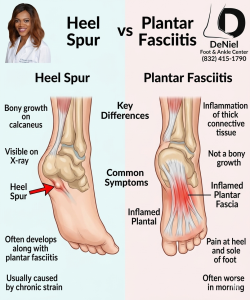
Heel Spur vs Plantar Fasciitis: Understanding the Differences
Don’t let heel pain slow you down! Is it a spur or fasciitis? Finally get the answer and a personal plan for relief. Call DeNiel Foot & Ankle Center now to reclaim your active life!
If you’re experiencing heel pain, you might be wondering whether you have a heel spur or plantar fasciitis. Both conditions can cause significant discomfort and impact your daily activities, but they are distinct issues that require different approaches for effective treatment. In Houston and Cypress, many patients seek solutions for these common foot problems, making it essential to understand the differences between heel spurs and plantar fasciitis. Heel spurs are bony growths that develop on the underside of the heel bone, often associated with conditions like plantar fasciitis. Conversely, plantar fasciitis involves inflammation of the plantar fascia, the thick band of tissue running across the bottom of your foot. Knowing these distinctions can help you choose the right path for relief.
Step into lasting comfort. 👟✨ This premium orthopedic insole features a layered gel and memory foam design, a deep ergonomic heel cup, and structural arch support specifically engineered for heel spur and plantar fasciitis relief.
Heel spurs are bony growths that develop on the underside of the heel bone, often accompanying conditions like plantar fasciitis. They can cause significant discomfort, making it challenging to enjoy daily activities or participate in sports. Fortunately, one effective way to alleviate this discomfort is the use of specialized insoles. In this article, we will explore the role of insoles for heel spurs, the types available, their benefits, and how to choose the right ones.
Dr. Eji Shobowale, DPM, pointing to a medical diagram of the foot to explain the common causes and anatomical sources of chronic heel pain.
Experiencing heel pain can be quite uncomfortable and even debilitating, preventing you from enjoying daily activities. Many individuals frequently experience heel ache, which can stem from various causes, including conditions like plantar fasciitis, Achilles tendinitis, and heel spurs. This article will explore the common reasons for heel discomfort, symptoms to watch for, and effective treatment options available.