Experiencing a blood blister on toe can be a concerning situation for many. These fluid-filled sacs can arise from a variety of causes, and understanding their symptoms, treatments, and preventive measures is crucial for anyone who is affected. Living in Houston or Cypress means you might often be on your feet, whether you’re enjoying outdoor activities, attending social gatherings, or managing daily tasks. However, with that active lifestyle, foot injuries, including blood blisters, can occur. This comprehensive guide will equip you with essential information about blood blisters on the toe and how to manage them effectively.
From new dads to grandpas, men’s feet change with age.
Father’s Day is not about grilling and gifts—it is the perfect time to talk about something dads often ignore until it is too late: their feet! Whether your dad is chasing toddlers, hitting the gym, or enjoying retirement, his feet have undergone significant changes over the years. At Deniel Foot & Ankle Center, your trusted Houston podiatrist, we understand how aging, hormones, and lifestyle factors impact men’s foot health.
Understanding the recovery process can make or break your experience after having bunions treatment done or if you’re thinking about it. The first part of recovery, no matter what type of bunion surgery you had performed, is a long process with many different phases along the way. Each week following your bunion operation will bring new accomplishments, whether it be dealing with pain, regaining strength, or trying to resume your usual daily routines; understanding what guidelines to follow is important. It’s important to note that bunion surgery recovery isn’t just about lounging on the couch watching your favourite shows; it is about following a systematic, structured way of increasing your foot’s ability to heal quickly and correctly! Most patients who inform themselves before the operation and have a solid understanding of procedures that need to be followed will end up with much smoother/excellent results than their non-informed counterparts. This comprehensive guide will provide you with everything necessary to know about bunion surgery recovery, from the day after your surgery until you can resume full activity.
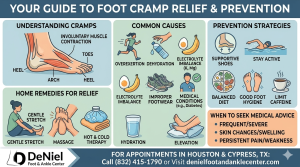
Your Guide to Foot Cramp Relief & PreventionYour Guide to Foot Cramp Relief & Prevention
Foot cramps can be painful and disruptive, affecting your daily activities and quality of life. Whether they occur during exercise, at night, or even while sitting still, knowing how to stop foot cramps is essential for finding relief and preventing them from recurring. In this article, we’ll explore the causes of foot cramps, effective home remedies, and when to seek professional help.
Women’s Foot Pain: The Most Common Conditions & How to Prevent Them
Foot problems in women can be a common yet often overlooked issue, particularly in a bustling city like Houston. Numerous factors can contribute to these concerns, including footwear choices, lifestyle habits, and underlying health conditions. As foot pain can significantly impact quality of life, it’s essential for women to understand common foot ailments, preventative measures, and effective treatments available locally.
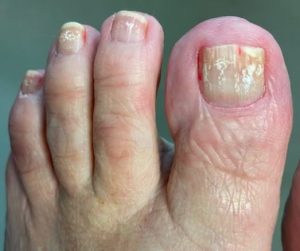
Have you noticed tiny white spots or streaks on your toenails? Don’t worry, you are not alone. Many people panic when they spot these marks, but the truth is, they’re often harmless. Sometimes, they are a clue about your health.
At DeNiel Foot & Ankle Center, our team often hears patients ask, “Why do I have white spots on my toenails?” In this post, we discuss the causes of white marks on toenails, what they might signal about your feet or body, and when you should schedule a visit with a Podiatrist Houston, TX, for consultation.