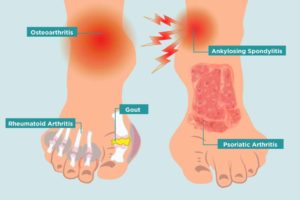
Types of arthritis, such as rheumatoid arthritis, osteoarthritis, and posttraumatic arthritis, affect the feet and cause difficulties in walking. Arthritis inflammation of the foot and ankle is because of the many joints present. There is no definite cure for arthritis, but the available treatments relieve symptoms and slow progression. Many patients have managed to lead fulfilling lives through arthritic foot pain relief, and they have remained active after proper treatment.
If you have questions about caring for arthritis of the foot or ankle, reach out to a foot specialist for his/her expert advice. Feel free to contact our office to make an appointment with our podiatrist. Our foot and ankle doctor, Dr. Ejodamen Shobowale, will provide you with the care you need to keep you pain-free on your feet.
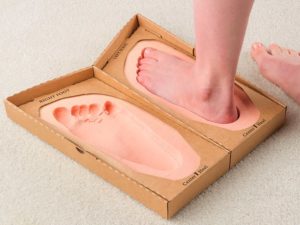
Worn out, torn, or broken orthotics can cause more problems to your feet. Orthotics are a medical device used to assist in mobility while correcting the function of the foot. They allow a patient to perform their daily movement with ease. If you are using orthotics and you experience inconvenience, discomfort, and inflammation, it is time to get new inserts. Available over-the-counter orthotics are for different foot problems. Flat Feet Insole Support and Custom Orthotics Houston are designed by a foot doctor to correct foot deformities and provide relief.
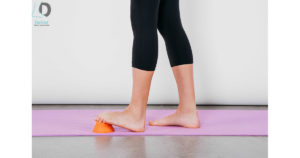
Ignoring the health of your foot, ankle, and toes will come at a cost. Regular stretching and exercising of the feet and ankles increase the range of motion to provide the best support and avoid overuse injuries. Whether you are a weekend warrior, an avid runner, or mall walker adding foot and ankle workout routines is very important for the health of your foot. Weakness of the lower extremities leaves the feet susceptible to foot running injury, sore achilles tendon, achilles tendonitis, spraining, straining, and overuse injury. Foot and ankle exercises improve balance, joint flexibility, and strength.
Before starting any exercise, warm up with at least 5 minutes of low-impact activity such as walking. As you warm up, get into the foot exercises to prevent running injury or sore achilles tendon, and if you are not sure how to go about it or experience pain, contact a podiatrist.
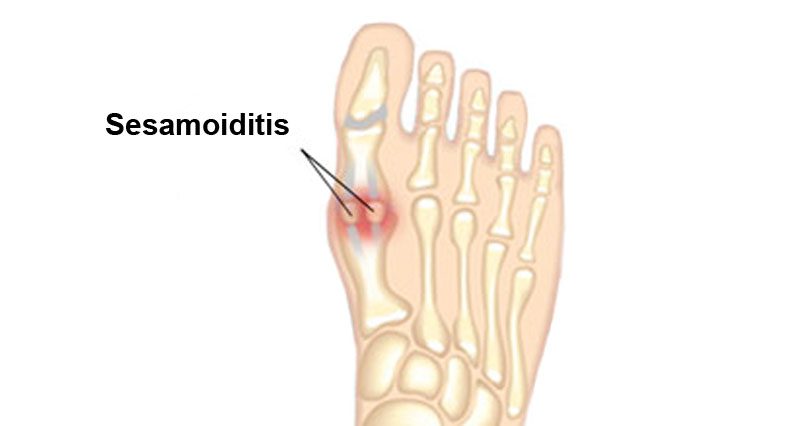
Sesamoiditis is the inflammation of the tendons attached to sesamoids in the foot. Sesamoids are bones connected to the muscles by tendons. The largest sesamoid in the body is the kneecap, and other smaller sesamoids are at the bottom of the foot near the big toe. Sesamoid pain is common among dancers and athletes due you excessive straining and overworking of the tendons. Treatment includes anti-inflammatory medication and rest.
Fractured sesamoid – This is a crack in the sesamoid bone. It can be an acute fracture caused by trauma to the foot. In this injury, the pain is immediate and the site of the crack is swollen. A chronic sesamoid fracture causes longstanding pain in the ball of the foot. The pain intensifies when active and is relieved when resting.
Sesamoiditis Symptoms
The condition causes pain that develops gradually under the ball of the foot; bruising or swelling can be noticed too. Another symptom is difficulty in bending or straightening the big toe, and it hurts to move it. Lastly, when you walk, you might get or hear a ‘pop’ sensation.
Risk factors of this condition:
People who overuse their tendons in the front of the foot.
Wearing poorly fitting shoes and high heels leading to the tendon’s inflammation.
Engaging in sports that place pressure on the ball of the foot such as ballet, running, and basketball.
Sesamoiditis Treatments
Depending on the degree and severity of the injury, sesamoiditis treatment may include one or more of these non-surgical options:
Taping, padding, or strapping – Place a pad to cushion the shoe in the sesamoid area. You may also tape the toe or strap it to relieve tension.
Immobilization – Avoid placing weight on the foot and wear a cast, permanent or removable.
Physical therapy – During immobilization, engage in physical therapy to strengthen and improve range of motion.
Oral medications – take over-the-counter nonsteroidal anti-inflammatory drugs to reduce inflammation and pain.
Orthotic devices – The use of orthotic devices to balance the pressure placed on the ball of the foot. These are prescribed devices that can be used for a long time.
Steroid injections – These are administered by a podiatrist to reduce pain and inflammation.
Stop whatever activity you suspect is the cause of sesamoiditis and those that put extra pressure on the ball of the foot.
You can opt for comfortable and supportive footwear and avoid poorly fitting shoes or high heels. Go for low-heeled and soft-soled shoes.
Surgical treatment
A podiatrist may recommend the surgical removal of one or both sesamoid bones, especially if it has a damaging effect on the foot. Also, if the big toe does not re-align itself in a healthy manner surgery can be used to realign it with the foot.
If you have questions about caring for sesamoiditis, reach out to a foot specialist for his/her expert advice. Feel free to contact our office to make an appointment with our podiatrist. Our foot and ankle doctor, Dr. Ejodamen Shobowale, can provide you with the care you need to keep you pain-free on your feet.
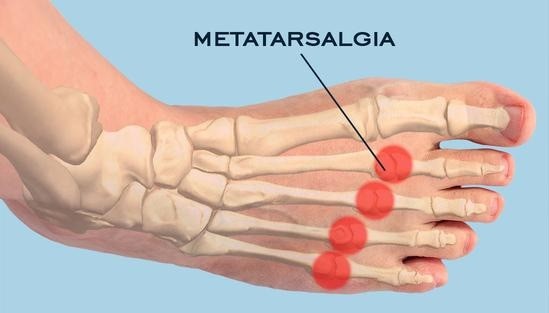
Forefoot pain and deformity decrease the quality of life because of deteriorated gait function. Metatarsalgia, pain in the ball of the foot, is a common orthopedic problem often not understood because it is not clear as heel pain. When the metatarsalgia condition is influenced by Morton’s neuroma, it is known as Metatarsalgia neuroma. Metatarsalgia can be diagnosed by clinical examination and the medical history of the patient. The symptom is at the metatarsophalangeal articulations with electrifying, dull, and burning pain occasionally radiating to the toes. The pain has a V-shape between the second and third toes, at the pressure point of the interphalangeal joint striking against the shoe front. There are diverse causes, but the treatment of the underlying problem is crucial for successful metatarsalgia treatment.
Primary metatarsalgia – This is the uncoordinated relationship between the metatarsal and other parts of the foot. It causes increased MT declination with the first ray unable to bear the weight it transfers the pressure to other areas of the foot.
Secondary metatarsalgia – Is caused by the indirect overloading of the forefoot. For example, trauma to the foot can alter the foot alignment causing rotational and angular displacement. If the structures that support the metatarsal joint are injured or fractured, the biomechanical alignment of the foot is unstable and painful. Other causes of secondary metatarsalgia include Morton’s neuroma, chronic inflammatory diseases, tarsal tunnel syndrome, hallux rigidus, and Freiberg infarction.
Iatrogenic metatarsalgia – This arises from complications after surgery of the forefoot, affecting the MT osteotomy, or having excessive shortening of the MT. Other complications include avascular necrosis, nonunion, or malunion.
Metatarsalgia treatment
The condition deteriorates the biomechanical condition of the foot, increasing pressure on the MT head when bearing weight. Several measures can improve or prevent the condition:
Put up the feet and rest them and avoid activities that cause pain to the foot, such as active sports that involve lots of jumping or running. Engage in low-impact activities such as swimming or cycling.
Apply an ice pack for 20 minutes and do it several times a day. Do not apply ice directly to the skin to avoid damage.
Change your footwear to flat shoes with plenty of room. The sole should be well-cushioned. Choose good sports shoes and replace any worn-out footwear.
Use shock-absorbing insoles and pads that fit in your shoes that are available in the sports shops, pharmacies, or buy online.
Adopt a healthy and balanced diet to maintain a healthy weight. Keep low-impact exercises to help you lose weight.
Take over-the-counter painkillers to relieve swelling and pain.
If the pain gets worse despite the above measures or you experience severe pain that interferes with your normal activities, and if you develop severe foot pain that threatens to change the shape of the foot you need immediate treatment. Metatarsalgia issues can be very uncomfortable to live with. If you are experiencing pain with your metatarsalgia neuroma, contact the podiatrist at DeNiel Foot & Ankle Center. Our doctor can provide the care you need to keep you pain-free and on your feet.
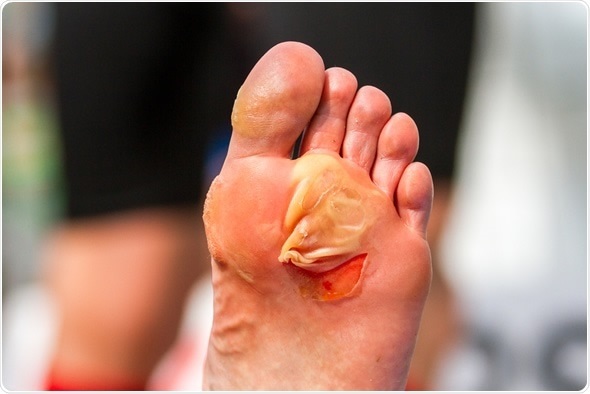
A foot blister is a fluid-filled pocket that develops in response to an infection or an injury, and it occurs in the top layer of the skin. Blister on foot happens over a damaged area to cushion the feet from further harm. Foot blister pain is because of the pressure on the feet.
Causes of blisters on the feet
Pressure and friction – When the feet continually rub against a rough surface, shoe, or socks it causes foot blisters. Inflammation and irritation result in redness, pain, and swelling. Initially, a red sore appears, then the body sends fluids to fill the opening to protect the underlying tissue layers that are delicate.
Burning – If the skin is burnt, the body responds by creating a blister to avoid further damage to the underlying tissues. Blisters develop after about two days but in severe burns, they appear immediately and the blister on foot heals when the burn itself heals.
Freezing – Frostbite happens in extremely cold conditions where the skin cells die and foot blisters form to keep the body warm and prevent further damage.
Medical conditions – Various medical conditions weaken the outer layer of the foot skin leaving it vulnerable to foot blisters. A blister can also signify infections, disorders, and diseases. These medical conditions include eczema, chickenpox, antibiotic treatment, blood-thinning medications, and being overweight.
Ruptured blood vessels – The tiny blood vessels in the epidermis of the skin break, they cause a blood blister. It occurs when the skin is pinched or crushed.
Contact dermatitis – Skin inflammation or dermatitis occurs when the foot skin is exposed to an irritant. If the exposure continues the condition progresses to form a blister on foot.
Other contact dermatitis foot blisters include
Insect stings and bites.
Skin allergens.
Nickel
Sulfates
Toxic chemical agents.
Foot Blister Treatment
Foot blister pain can be very uncomfortable to live with. If you are experiencing pain with your foot blister, contact the podiatrist at DeNiel Foot & Ankle Center. Our doctor can provide the care you need to keep you pain-free and on your feet and it can heal in a few days.
Leave it alone – Blisters heal naturally and provide a safe space for healing allowing new skin to grow. After the new skin grows, the body slowly reabsorbs the fluid and the skin dries up and flakes off.
Protect it – Protect the blister to prevent it from popping to decrease the time it takes for it to heal. Avoid friction around the blister and cover it with a loose bandage to allow airflow necessary for drying out the blister. Use an adhesive bandage to secure it in position.
Cushion the blister with a cushioned adhesive bandage designed for blisters to reduce pain and keep out blisters as the blister heals.
Pad it with a moleskin that absorbs pressure to avoid putting it on the blister.
Draining a blister
If the blister is in an inconvenient place or it is large, a foot doctor can advise you to drain the blister. It is best to let your doctor drain the blister without damaging the covering of the blister. The draining is usually done within 24 hours after it forms.
When you notice that the blister has green or yellow fluid or the pain gets worse, or the area is hot to touch or inflamed, contact a podiatrist immediately for foot blister treatment. Also, if the blister keeps coming back, or the pain gets worse or it is a symptom of an allergic reaction a foot doctor will know how best to treat it.
Frequently Asked Questions
How do you heal a blister on your foot fast?
To heal a blister quickly, keep it clean and protected. Wash the area gently with soap and water, apply an antiseptic, and cover it with a bandage or moleskin. Avoid pressure or friction on the blister, and let it heal naturally. If it bursts, clean it, apply an antibiotic ointment, and cover it to prevent infection.
Is it better to pop a blister or leave it?
It’s generally better to leave a blister intact, as the fluid inside acts as a cushion and promotes healing. If the blister is large or painful, you can drain it safely using a sterilized needle. Avoid removing the skin flap, as it protects the underlying tissue.
Can I walk with a blister on my foot?
Yes, you can walk with a blister, but it’s best to reduce friction and pressure. Use protective padding like moleskin or blister cushions. If walking causes significant pain, take breaks to rest your feet and avoid aggravating the blister.
What ointment is good for blisters?
Antibiotic ointments like Neosporin or Bacitracin are good for blisters, especially if they’ve popped. They help prevent infection and keep the area moisturized for faster healing. Aloe vera gel can also soothe and aid in recovery.