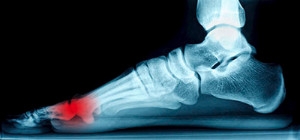
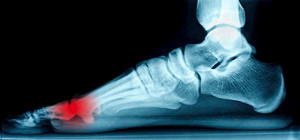
 The purpose of sesamoid bones is to provide force as you push off your toes while running. They are the two bones located under the big toe that are connected to tendons in the foot. If this area becomes inflamed, a condition that is known as sesamoiditis can develop. It may be caused by wearing shoes that do not have adequate room for the toes to move freely in, or it can happen from participating in repetitive running and jumping activities. After a proper diagnosis is performed, which typically consists of having an MRI taken, the correct treatment can begin. This may consist of wearing custom made orthotics which can aid in reducing pressure that is put on the sesamoid bones. It may also be beneficial to temporarily cease the activity which may have caused this condition. If you are suffering from sesamoiditis, it is suggested that you speak to a podiatrist who can recommend the best treatment for you.
Sesamoiditis is an unpleasant foot condition characterized by pain in the balls of the feet. If think you’re struggling with sesamoiditis, contact Dr.Eji Shobowale of DeNiel Foot & Ankle Center. Our doctor will treat your condition thoroughly and effectively.
Sesamoiditis
Sesamoiditis is a condition of the foot that affects the ball of the foot. It is more common in younger people than it is in older people. It can also occur with people who have begun a new exercise program, since their bodies are adjusting to the new physical regimen. Pain may also be caused by the inflammation of tendons surrounding the bones. It is important to seek treatment in its early stages because if you ignore the pain, this condition can lead to more serious problems such as severe irritation and bone fractures.
Causes of Sesamoiditis
- Sudden increase in activity
- Increase in physically strenuous movement without a proper warm up or build up
- Foot structure: those who have smaller, bonier feet or those with a high arch may be more susceptible
Treatment for sesamoiditis is non-invasive and simple. Doctors may recommend a strict rest period where the patient forgoes most physical activity. This will help give the patient time to heal their feet through limited activity. For serious cases, it is best to speak with your doctor to determine a treatment option that will help your specific needs.
If you have any questions please feel free to contact our office located in Cypress, TX. We offer the newest diagnostic and treatment technologies for all your foot and ankle needs.
Read more about Sesamoiditis
Sesamoiditis is a condition that affects the joint that is just behind the big toe in the area known as the ball of the foot. It is most common in younger people and people who have just begun an exercise program. Since the sesamoid bones are like a pulley controlling the big toe, they can rub against each other and cause a gradual onset of pain. Pain may also be caused by the inflammation of tendons surrounding the bones. If ignored, sesamoiditis can lead to other, more serious problems such as severe irritation and fractures of the bones.
The cause of sesamoiditis is sudden increase in activity. The ball of your foot acts as a springboard to help you lift off when you are jogging or running. Sudden increase in the use of these bones or the tendon that controls them can cause irritation. The tendon then begins to develop inflammation and the joint begins to swell. People with smaller, bonier feet or those with a high arch are typically more susceptible to this condition.
Sesamoiditis is fairly simple to diagnose since the symptoms have a gradual onset rather than a sudden impact. The symptoms begin with slight irritation around the joint shortly after the increase in activity. The discomfort eventually turns to pain with light swelling and possibly redness. Although redness or bruising are rare, this may be a symptom. After each session of exercising, the aggravated joint becomes more irritated and increases into a very intense throbbing.
Treatment for sesamoiditis can vary depending on the severity of the situation. However, treatment is almost always approached in a noninvasive way. For a case that is just beginning the doctor may recommend a very strict rest period that will limit the activity allowed on the joint. If you must be active, a recommendation for as modified shoe or insole, along with bandaging and immobilizing the big toe will be made to ensure that pressure is not placed on the joint. For severe cases, it is typically recommended that the joint and the big toe be completely immobilized to allow adequate time to heal. Ice and an over the counter anti-inflammatory may can help with the pain and discomfort while you are at rest.
When you return to your regular exercise activities, it is recommended that you use an insole that will allow even distribution of impact to your entire foot, rather than just the balls of your foot. This will prevent further aggravation of the injury.
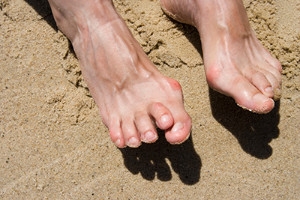
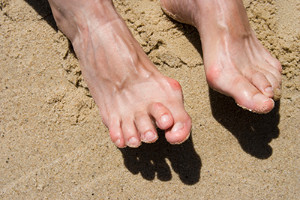 Patients who have a medical condition known as hammertoe are familiar with the deformity of the second toe overlapping the third or big toe. It is considered to be a muscle imbalance, and it can be caused from a variety of factors. These can include genetic traits, having a history of toe injuries, or wearing shoes that do not have adequate room for the toes to move freely in. The toe muscles can gradually become weaker, and the toe may become difficult to straighten out. Some patients find relief in performing specific exercises that are designed to strengthen the toes. These can include picking up items off the floor with the toes, and practicing overall foot stretches. For severe cases of hammertoe, surgery may be a viable option to permanently straighten the toes. If you are afflicted with this condition, it is strongly suggested that you seek the counsel of a podiatrist who can advise you on the proper treatment options that are correct for you.
Hammertoes can be a painful condition to live with. For more information, contact Dr.Eji Shobowale of DeNiel Foot & Ankle Center. Our doctor will answer any of your foot- and ankle-related questions.
Hammertoe
Hammertoe is a foot deformity that occurs due to an imbalance in the muscles, tendons, or ligaments that normally hold the toe straight. It can be caused by the type of shoes you wear, your foot structure, trauma, and certain disease processes.
Symptoms
- Painful and/or difficult toe movement
- Swelling
- Joint stiffness
- Calluses/Corns
- Physical deformity
Risk Factors
- Age – The risk of hammertoe increases with age
- Sex – Women are more likely to have hammertoe compared to men
- Toe Length – You are more likely to develop hammertoe if your second toe is longer than your big toe
- Certain Diseases – Arthritis and diabetes may make you more likely to develop hammertoe
Treatment
If you have hammertoe, you should change into a more comfortable shoe that provides enough room for your toes. Exercises such as picking up marbles may strengthen and stretch your toe muscles. Nevertheless, it is important to seek assistance from a podiatrist in order to determine the severity of your hammertoe and see which treatment option will work best for you.
If you have any questions, please feel free to contact our office located in Cypress, TX. We offer the newest diagnostic and treatment technologies for all your foot care needs.
Read more about Hammertoe
Hammertoe is a foot deformity that occurs due to an imbalance in the tendons, muscles, or ligaments that are responsible for holding the toes in their normal position. This condition may be caused by poor footwear, foot structure, trauma, and disease. The most common solution for hammertoe is to relieve the pain by changing your footwear and wearing orthotics. In severe cases, surgery may be required.
The shoes that are most likely to cause hammertoe are high heeled shoes or shoes that are too tight in the toe box. Tight shoes will force your toes to crowd together in a curled position. This position will likely continue when you take your shoes off. Another cause is trauma. When you stub your toe, you are increasing the chance that you will develop hammertoe.
There are risk factors that may make you more likely to develop this condition. Women are more likely to have the condition compared to men, and it is also more likely to appear in those who are older in age.
Many different foot problems can be avoided by wearing shoes that have adjustability, adequate toe room, and low heels. Furthermore, if you want to buy new shoes, you should look to purchase them at the end of the day and make sure you know your correct size. The importance of buying shoes at the end of the day is that your feet swell as the day progresses. You should also ensure that you are wearing your correct size because your shoe size may change as you grow older.
To diagnose someone with hammertoe, your podiatrist will need to conduct a thorough examination of your foot. Your doctor may even order an x-ray to evaluate the bones and joints of your feet and toes.
If you have hammertoe, your podiatrist may recommend that you wear shoes that fit you better along with inserts to place inside them. Additionally, he or she may suggest special exercises for you to perform to stretch your toes. One helpful exercise it to pick up marbles with your feet or crumple a towel with your toes.
Prior to meeting with your podiatrist, it will be helpful to make a list of all the symptoms you are experiencing. You should also make a note of medications you are taking and important personal information about your medical history.
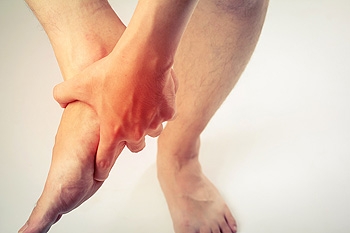
 The medical condition that is referred to as Sever’s disease affects the growth plate in the heel. It typically occurs during a growth spurt that happens during puberty. The people that may experience this are teenagers who participate in running and jumping activities, and the growth plate may become injured. The symptoms that are commonly associated with this condition include heel pain, limping, and the feet may feel stiff upon arising in the morning. Mild relief can be found when shoe inserts are worn which can help to protect the heel, and wearing an elastic bandage may aid in reducing existing pain and swelling. If you notice your child is experiencing any of these symptoms, please schedule a consultation with a podiatrist, who can properly diagnosis and treat Sever’s disease.
Sever’s disease often occurs in children and teens. If your child is experiencing foot or ankle pain, see Dr.Eji Shobowale at DeNiel Foot & Ankle Center. Our doctor can treat your child’s foot and ankle needs.
Sever’s Disease
Sever’s disease is also known as calcaneal apophysitis, which is a medical condition that causes heel pain I none or both feet. The disease is known to affect children between the ages of 8 and 14.
Sever’s disease occurs when part of the child’s heel known as the growth plate (calcaneal epiphysis) is attached to the Achilles tendon. This area can suffer injury when the muscles and tendons of the growing foot do not keep pace with bone growth. Therefore, the constant pain which one experiences at the back of the heel will make the child unable to put any weight on the heel. The child is then forced to walk on their toes.
Symptoms
Acute pain – Pain associated with Sever’s disease is usually felt in the heel when the child engages in physical activity such as walking, jumping and or running.
Highly active – Children who are very active are among the most susceptible in experiencing Sever’s disease, because of the stress and tension placed on their feet.
If you have any questions, please feel free to contact our office located in Cypress, TX. We offer the newest diagnostic and treatment technologies for all your foot and ankle injuries.
Read more about Sever’s Disease
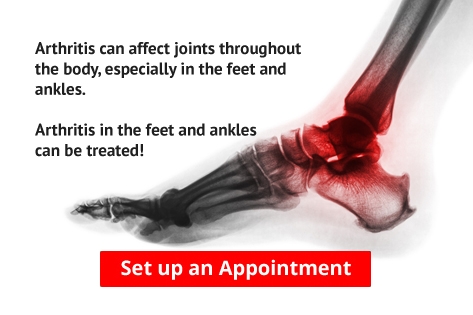
If you are suffering from tenderness, pain, or stiffness in the joints of your feet or ankles, call us to schedule an appointment.



