Foot pain? – Purchase Gabapentin Online
(832) 415-1790
15003 FM-529 Road Suite A, Houston, TX 77095
info@denielfootandanklecenter.com
Patient Portal
DeNiel Foot & Ankle Center Logo
  • OUR DOCTOR
  • OUR CLINIC
  • Appointments
  • SERVICES
    • Achilles Tendon
    • Ankle Pain
    • Ankle Sprains
    • Arthritic Foot & Ankle Care
    • Athletes Foot
    • Bunion Surgery
    • Corns
    • Diabetic Foot Care
    • Flat Feet
    • Foot Pain
    • Foot Surgery
    • Toenail Fungus Treatment
    • Geriatric Foot Care
    • Hammertoes
    • Heel Pain
    • Ingrown Toenails
    • Heel Spurs
    • KeryFlex Nail Restoration System
    • Laser Treatment For Fungal Toenails
    • Morton’s Neuroma Treatment
    • Pediatric Foot Care
    • Plantar Fasciitis
    • Sports Medicine
    • Plantar Warts
    • Shockwave Treatment
    • Toe Shortening Surgery
    • Wound Care Specialist
  • FAQS
  • Financing
  • Videos
  • BLOG
  • Patient Portal
Location
Hours of Operation
Hours Of Operation
Mon-Fri 8:30 AM – 5:00 PM
Saturday By Appointment Only
Sunday Closed
Book An Appointment
Book An Appointment

DeNiel Foot & Ankle Center is offering online video visits for patients.

Book Online
+
HomeBlog Posts
  • 1
  • …
  • 84
  • 85
  • 86
  • 87
  • 88
  • …
  • 101
29Apr

Falls Prevention for Older Adults | DeNiel Foot & Ankle Center

by admin

Elderly Americans are very susceptible to falls as they get older. Everyone experiences decreases in flexibility, balance, strength, and the senses as they age. This correlates to some eye-opening statistics. 1 in 4 Americans aged 65 and older fall each year. An elderly American is being treated for a fall in an emergency room every 11 seconds, and every 19 minutes, an older person dies from falling. In light of these striking statistics, one can see the importance of taking steps to prevent falls.

Finding an exercise program for the elderly is an excellent way to reduce the likelihood of falls. Look for an exercise program that improves strength and balance. Elderly people who live a more sedentary lifestyle, with little physical activity, are at an increased risk of falling. Wearing well-fitted footwear that provides good foot support and cushion will help prevent falls from poorly fitted shoes. Talking to a podiatrist about your susceptibility to falls and about inspecting your prescriptions will help to avoid any medication that could make falls more likely. Due to a decline in the senses among the elderly, having your eyes and hearing checked is recommended.

Around half of all falls occur in the household. Removing tripping hazards in the home and making it more accommodating to older persons can significantly reduce falls. Some notable household changes include increasing lighting around the house, installing grab bars in the shower and bathroom, and making sure the floor is clear of clutter. Other smart options include installing a shower chair, using rubber-bottomed rugs, and placing railings on both sides of stairwells.

Finally, discuss with a doctor and your family about your fear of falling. This will help to increase awareness among the population on the need for fall prevention. A lack of awareness on the matter, and a downplaying of importance are what increase the risks of falling. Following these tips can help to reduce the risk for yourself and your loved ones.


23Apr

Two Types of Ankle Sprains

by admin

If ligaments in the ankle are torn or stretched, it is indicative of an ankle sprain. The purpose of these ligaments is to hold the ankle in place. If you have sprained your ankle, pain and discomfort is often experienced, and it may be difficult to bear any weight on the foot. Research has indicated there are two types of ankle sprains. These include eversion and inversion sprains. If the ankle turns in an outward direction, this is typically an eversion sprain. The latter occurs when the foot is twisted, and the ankle rolls inward. Some of the reasons why this type of injury occurs include wearing the wrong shoes, which can make it easier to fall, in addition to participating in high impact sporting activities. This produces stress on the ankle joints, which can lead to weakness in the foot. If you feel you have sprained your ankle, it is suggested to speak to a podiatrist who can perform a complete evaluation of the injured foot.

Ankle sprains are common but need immediate attention. If you need your feet checked, contact Dr.Eji Shobowale from DeNiel Foot & Ankle Center. Our doctor can provide the care you need to keep you pain-free and on your feet.

How Does an Ankle Sprain Occur?

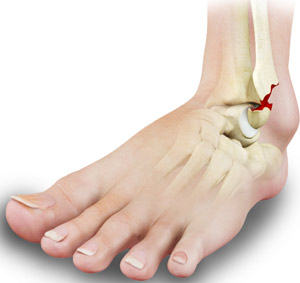
Ankle sprains take place when the ligaments in your ankle are torn or stretched beyond their limits. There are multiple ways that the ankle can become injured, including twisting or rolling over onto your ankle, putting undue stress on it, or causing trauma to the ankle itself.

What Are the Symptoms?

  • Mild to moderate bruising
  • Limited mobility
  • Swelling
  • Discoloration of the skin (depending on severity)

Preventing a Sprain

  • Wearing appropriate shoes for the occasion
  • Stretching before exercises and sports
  • Knowing your limits

Treatment of a Sprain

Treatment of a sprain depends on the severity.  Many times, people are told to rest and remain off their feet completely, while others are given an air cast. If the sprain is very severe, surgery may be required.

If you have suffered an ankle sprain previously, you may want to consider additional support such as a brace and regular exercises to strengthen the ankle.

If you have any questions please feel free to contact our office located in Cypress, TX. We offer the newest diagnostic and treatment technologies for all your foot and ankle needs.

Read more about Ankle Sprains

16Apr

Is Athlete’s Foot Contagious?

by admin

Athlete’s foot is a common foot condition that many people experience. It typically affects the area between the toes in addition to the bottom of the feet. There are several symptoms that are associated with this ailment. These may include redness, dry areas in the affected portions of skin, or extreme itchiness. This contagious fungal infection is generally found in public places, which may include community pools, shower room floors, and surrounding areas. Patients who have certain existing medical conditions may have an increased risk of getting athlete’s foot. These include a weak immune system, eczema, or certain allergies. Mild relief can be found while using an anti-fungal spray. For stubborn and severe cases of athlete’s foot, it is strongly suggested that you consult with a podiatrist who can properly treat your condition.

Athlete’s foot is an inconvenient condition that can be easily reduced with the proper treatment. If you have any concerns about your feet and ankles, contact Dr.Eji Shobowale from DeNiel Foot & Ankle Center.  Our doctor will treat your foot and ankle needs.

Athlete’s Foot: The Sole Story

Athlete’s foot, also known as tinea pedis, can be an extremely contagious foot infection. It is commonly contracted in public changing areas and bathrooms, dormitory style living quarters, around locker rooms and public swimming pools, or anywhere your feet often come into contact with other people.

Solutions to Combat Athlete’s Foot

  • Hydrate your feet by using lotion
  • Exfoliate
  • Buff off nails
  • Use of anti-fungal products
  • Examine your feet and visit your doctor if any suspicious blisters or cuts develop

Athlete’s foot can cause many irritating symptoms such as dry and flaking skin, itching, and redness. Some more severe symptoms can include bleeding and cracked skin, intense itching and burning, and even pain when walking. In the worst cases, Athlete’s foot can cause blistering as well. Speak to your podiatrist for a better understanding of the different causes of Athlete’s foot, as well as help in determining which treatment options are best for you.

If you have any questions please feel free to contact our office located in Cypress, TX. We offer the newest diagnostic and treatment technologies for all your foot and ankle needs.

Read more about Athlete’s Foot 101

16Apr

Athlete’s Foot 101

by admin

Athlete’s foot is an extremely contagious infection caused by a fungus that results in itching, burning, dry, and flaking feet. The fungus that causes athlete’s foot is known as tinea pedis and thrives in moist, dark areas such as shower floors, gyms, socks and shoes, commons areas, public changing areas, bathrooms, dormitory style houses, locker rooms, and public swimming pools. Athlete’s foot is difficult to treat as well because of the highly contagious and recurrent nature of the fungus.

Tinea is the same fungus that causes ringworm, and is spread by direct contact with an infected body part, contaminated clothing, or by touching other objects and body parts that have been exposed to the fungus. Because the feet are an ideal place for tinea to grow and spread, this is the most commonly affected area.  It is, however, known to grow in other places. The term athlete’s foot describes tinea that grows strictly on the feet.

The most commonly infected body parts are the hands, groin, and scalp, as well as the feet. Around 70% of the population suffer from tinea infections at some point in their lives, however not all of these cases are athlete’s foot. Just like any other ailment, some people are more likely to get it than others, such as people with a history of tinea infections or other skin infections, both recurring and non-recurring ones. The extent to which a person experiences regrowth and recurrent tinea infections varies from person to person.

Sometimes people will not even know that they are infected with tinea or that they have athlete’s foot because of a lack of symptoms. However, most experience mild to moderate flaking, itching, redness, and burning. However, some of the more severe symptoms include cracking and bleeding skin, intense itching and burning, pain while walking or standing, and even blistering.

Because of the recurring nature of the tinea fungus and the athlete’s foot it causes, the best way to treat this condition is with prevention. You can take some preventative measures such as wearing flip flops or sandals in locker rooms and public showers to reduce contact with the floor. It also helps to keep clean, dry feet while allowing them to breathe. Using powders to keep your feet dry is a good idea, as well as keeping your feet exposed to light and cool air, to prevent the growth of tinea. If you do happen to get athlete’s foot, opt for using topical medicated creams, ointments or sprays. These treatments help eliminate and prevent it from coming back.

8Apr

Possible Causes of Ingrown Toenails

by admin

A condition that is known as ingrown toenails may be a result of the toenail growing into the surrounding skin. The big toe is typically affected, and can cause pain and discomfort. There are several symptoms that may be associated with this condition, including possible discharge, redness and irritation around the toe, and pain when the toe is touched. There are many reasons why this ailment might develop. These may include toenails that have been trimmed incorrectly, wearing shoes that may be too tight, or an injury that may have happened to the toe. If you have an ingrown toenail, it may be helpful to gently push the affected skin away from the nail. If it should become infected, it is advised that you consult a podiatrist who can discuss the best treatment options for you.

Ingrown toenails can become painful if they are not treated properly. For more information about ingrown toenails, contact Dr.Eji Shobowale of DeNiel Foot & Ankle Center. Our doctor can provide the care you need to keep you pain-free and on your feet.

Ingrown Toenails

Ingrown toenails occur when a toenail grows sideways into the bed of the nail, causing pain, swelling, and possibly infection.

Causes

  • Bacterial infections
  • Improper nail cutting such as cutting it too short or not straight across
  • Trauma to the toe, such as stubbing, which causes the nail to grow back irregularly
  • Ill-fitting shoes that bunch the toes too close together
  • Genetic predisposition

Prevention

Because ingrown toenails are not something found outside of shoe-wearing cultures, going barefoot as often as possible will decrease the likeliness of developing ingrown toenails. Wearing proper fitting shoes and using proper cutting techniques will also help decrease your risk of developing ingrown toenails.

Treatment

Ingrown toenails are a very treatable foot condition. In minor cases, soaking the affected area in salt or antibacterial soaps will not only help with the ingrown nail itself, but also help prevent any infections from occurring. In more severe cases, surgery is an option. In either case, speaking to your podiatrist about this condition will help you get a better understanding of specific treatment options that are right for you.

If you have any questions please feel free to contact our office located in Cypress, TX. We offer the newest diagnostic and treatment technologies for all your foot and ankle needs.

Read more about Ingrown Toenails

8Apr

Ingrown Toenails

by admin

An ingrown toenail is a nail that has curved downward and grown into the skin.  This typically occurs at either the nail borders or the sides of the nail.  As a result, pain, redness, swelling, and warmth may occur in the toe.  If a break in the skin forms due to the ingrown nail, bacteria may enter and cause an infection in the area; this is typically characterized by a foul odor and drainage.

Ingrown toenails have multiple reasons for developing.  In many instances, the condition is a result of genetics and is inherited.  The most common cause, however, is improper trimming; cutting the toenails too short forces the skin beside the nail to fold over.  An ingrown toenail can also develop due to trauma, such as stubbing the toe, having an object fall on the toe, or participating in activities that involve repeated kicking or running.  Wearing shoes that are too tight or too short can also cause ingrown toenails.

Treatment for an ingrown toenail varies between patients and the severity of the condition.  In most cases, it is best to see your podiatrist for thorough and proper treatment.  After examining your toe, your podiatrist may prescribe oral antibiotics to clear the infection if one is present.  Surgical removal of either a portion of the nail or the entire nail may also be considered.  In some cases, complete removal or destruction of the nail root may be required.  Most patients who undergo nail surgery experience minimal pain afterward and can return to normal activity the following day.

Ingrown toenails can be prevented with proper nail trimming and by avoiding improper-fitting shoes.  When cutting the toenails, be sure that you are cutting in a straight line and avoid cutting them too short.  Shoes should not be too short or tight in the toe box.

  • 1
  • …
  • 84
  • 85
  • 86
  • 87
  • 88
  • …
  • 101

Search Our Blog Articles

Date Posts

May 2026
M T W T F S S
 123
45678910
11121314151617
18192021222324
25262728293031
« Apr    

Tags

ankle sprain (18) bunion (22) bunion doctor (15) bunion surgery (11) cause of neuropathy (13) corn on the bottom of foot (10) corns on feet (15) cracked heel (10) custom orthotics (14) Deniel Foot & Ankle Center (17) diabetes and feet (18) diabetic foot (19) diabetic foot care (26) diabetic foot ulcer (13) diabetic foot ulcers (12) flat feet (13) Foot and Ankle Sprain Specialist in Houston TX (11) foot care (10) foot exercises for foot pain (13) foot fungus (21) foot fungus and athlete's foot (13) foot health (13) foot heel pain causes (12) foot pain (77) foot pain houston (24) foot pain relief (21) fungal toenails (15) healing a sprained ankle (10) heel pain (44) heel pain relief (32) houston foot doctor (18) houston podiatrist (32) ingrown toenail (13) nail fungus (10) peripheral neuropathy (21) Plantar fasciitis (53) plantar fasciitis treatment (14) running injuries (12) sports injury treatment houston (13) sprained ankle treatment (10) sprain treatment (13) swollen feet during pregnancy (11) tingling foot pain (16) toenail fungus (36) toenail fungus treatment (25)
DeNiel Foot & Ankle Center Logo

abmp acfas temple Winona

Connect With Us

Our Contacts

  • 15003 FM-529 Road Suite A
    Houston, TX 77095 Get directions on the map
  • Phone: (832) 415-1790, Fax: (281) 619-7998
  • info@denielfootandanklecenter.com
Copyright © DeNiel Foot & Ankle Center    |   
Privacy Policy    |   
Sitemap
For emergency cases      (832) 415-1790